ReadingTE Weekly 04
The Future Is a Maintenance Problem
From post-quantum encryption, wildfires and Asian deterrence to AI editing, American entrepreneurship and financial fraud, this issue argues that societies are better at announcing breakthroughs than maintaining the systems that make progress safe and durable. It concludes with 10 useful English expressions from the issue.
The most important date in The Economist’s August 1st 2026 issue is not the day a quantum computer finally breaks modern encryption. It is today. Intelligence agencies and criminals can already collect encrypted material in the hope of reading it later, which means that an apparently future threat is creating a present liability.
The same timing problem appears across the issue. Europe’s record fires are the visible result of risks accumulated over decades. China tests American alliances before anyone formally abandons them. Artificial intelligence makes prose abundant before institutions learn how to verify and edit it. A boom in American business creation coincides with a long decline in the enforcement that distinguishes enterprise from fraud.
These stories share more than a vague sense of disruption. They reveal a persistent bias in modern politics and business: breakthroughs attract money and attention, whereas maintenance looks slow, defensive and unglamorous. Yet the benefits of innovation depend on institutions upgrading before their old assumptions fail. The future is therefore not only an invention problem. It is a maintenance problem.
1. Tomorrow’s vulnerabilities are accumulating today
The leader on post-quantum cryptography offers the clearest example. A sufficiently powerful quantum computer could use an already known algorithm to crack encryption that protects commerce, government and private communication. Nobody knows exactly when such a machine will arrive. That uncertainty is not a reason to wait, because data harvested now may remain sensitive when it can eventually be decrypted.
The technical replacement already exists. Post-quantum cryptography can run on classical computers, and browsers, messaging services and cloud providers have begun adopting it. But front-end progress conceals a maintenance backlog. Cloudflare reports that 59% of the front-end traffic it handles has switched, compared with only 11% of back-end servers. Sensors, medical devices and unsupported hardware may be difficult or impossible to patch. The bottleneck is not discovery but inventory, compatibility, procurement and disciplined implementation.
Europe’s fires turn the same logic into smoke and heat. The area burned near Bordeaux in six days was almost three times France’s recent annual average. Yet the leader insists that even this is not a “new normal”: warming is continuing, so the distribution of risk is still moving. Firefighting remains necessary, but land management, building rules, public-health planning and smoke protection must all be designed for conditions that have not yet reached equilibrium.
The review of Annie Jacobsen’s imagined genetically engineered plague makes the cost of delay more dramatic. In her scenario, detection fails, agencies do not share data and America has only 100 isolation beds for a population above 340m. The fictional pathogen is spectacular; the institutional weaknesses are mundane. Beds, reporting protocols and trusted communication cannot be improvised after exponential spread begins.
In all three cases, prevention suffers from a political asymmetry. Its costs are immediate and visible, whereas the disaster it averts remains hypothetical. Once disaster arrives, the relationship reverses: the need is undeniable, but the cheapest options have disappeared.
2. Deterrence is an asset that requires maintenance
China’s pressure on Japan, the Philippines and Australia tests another inherited system. Joint Chinese-Russian bomber flights, a ballistic-missile launch over the Philippines and a live-fire exercise in Japan’s exclusive economic zone are not simply isolated provocations. They probe whether American commitments still impose predictable costs.
Asian allies have sensible responses available. They can spend more on their own defence, build stronger ties with one another and make American involvement harder to unwind. Australia and Japan are already helping the Philippines improve its maritime capacity. But local effort cannot fully replace the credibility of the United States, and credibility is damaged less by one formal withdrawal than by repeated hesitation.
This is why Donald Trump’s preference for smooth summits with Xi Jinping matters. An alliance is not maintained by the text of a treaty alone. It depends on an adversary believing that political leaders will accept inconvenience and risk when the promise is tested. If every provocation is treated as an unwelcome distraction from bilateral diplomacy, the commitment depreciates even while it remains officially intact.
The European discussion of French nuclear protection and Canada’s search for security partners shows that the problem is not confined to Asia. Allies can diversify, but a collection of improvised Plan Bs is not automatically a strategy. Weapons, command structures, intelligence sharing and political authorisation have to work together before a crisis. Deterrence is less like an insurance document kept in a drawer than infrastructure that must be exercised, financed and repaired.
3. AI moves the bottleneck from production to judgment
The issue’s investigation of AI writing is valuable because it avoids both panic and enchantment. Large language models are improving. Some once-obvious habits, such as excessive em-dashes and fashionable corporate vocabulary, are becoming less reliable markers. The machines can already produce excellent emails and passable longer prose at almost no marginal cost.
That does not eliminate human work. It changes where the scarce work sits. When text is expensive to produce, drafting is the bottleneck. When text becomes abundant, commissioning, checking, selecting and rewriting become more valuable. A plausible sentence may still contain an error or conceal an empty claim. Detection tools can identify statistical patterns, but they cannot decide whether an argument is worth making.
The same distinction helps interpret the issue’s reports on AI revenues and quantum computing. Impressive capability is not identical to a viable economic system. AI companies are generating revenue quickly but spending even faster on chips and data centres. Quantum machines may transform a narrow group of simulations while offering no advantage for many ordinary tasks. The sensible question is not whether a technology is revolutionary in the abstract, but where it improves an entire workflow after verification, energy, capital and integration costs are included.
This also explains why editing is more than cosmetic repair. A good editor sets the task, identifies the intended reader, tests evidence and removes language that only sounds analytical. As generative systems improve, stylistic detection will become less useful. Human advantage will lie increasingly in judgment about purpose and consequence.
4. Dynamism without enforcement can become extraction
America’s startup boom is one of the issue’s most optimistic stories. New-business applications averaged 466,000 a month from the start of 2024, and full-time self-employment reached its highest level this century in 2025. The increase is not confined to glamorous venture-backed AI firms. Professional services, retail, health care and social assistance are all producing new businesses.
Technology has reduced the fixed costs of independence. E-commerce provides distribution; software handles administrative work; AI helps small firms market products and serve customers. A difficult entry-level labour market may also be pushing younger Americans to create jobs rather than wait for established employers to offer them.
The report on financial fraud is the dark companion to this story. Federal white-collar prosecutions have fallen for decades and are on course to be roughly half their level 20 years ago. Complex fraud requires experienced investigators and lawyers working for long periods. When personnel are moved to terrorism, immigration or drugs, the effective price of deception falls even if the law itself does not change.
Entrepreneurship and enforcement are sometimes presented as opposites, as though less supervision must mean more dynamism. In reality, trustworthy markets are maintained goods. Honest entrants need customers, investors and suppliers to believe that accounts, contracts and claims are credible. When oversight collapses, the advantage shifts from people who discover better products to people who are best at hiding risk or exploiting ambiguity.
The issue’s stories about perpetual futures and selling stakes in football make the same point in smaller settings. Financial engineering can widen access to capital, but complexity also creates distance between control, reward and responsibility. Innovation deserves room to experiment; it does not deserve freedom from legible ownership and enforceable obligations.
5. Measurement disciplines judgment but cannot replace it
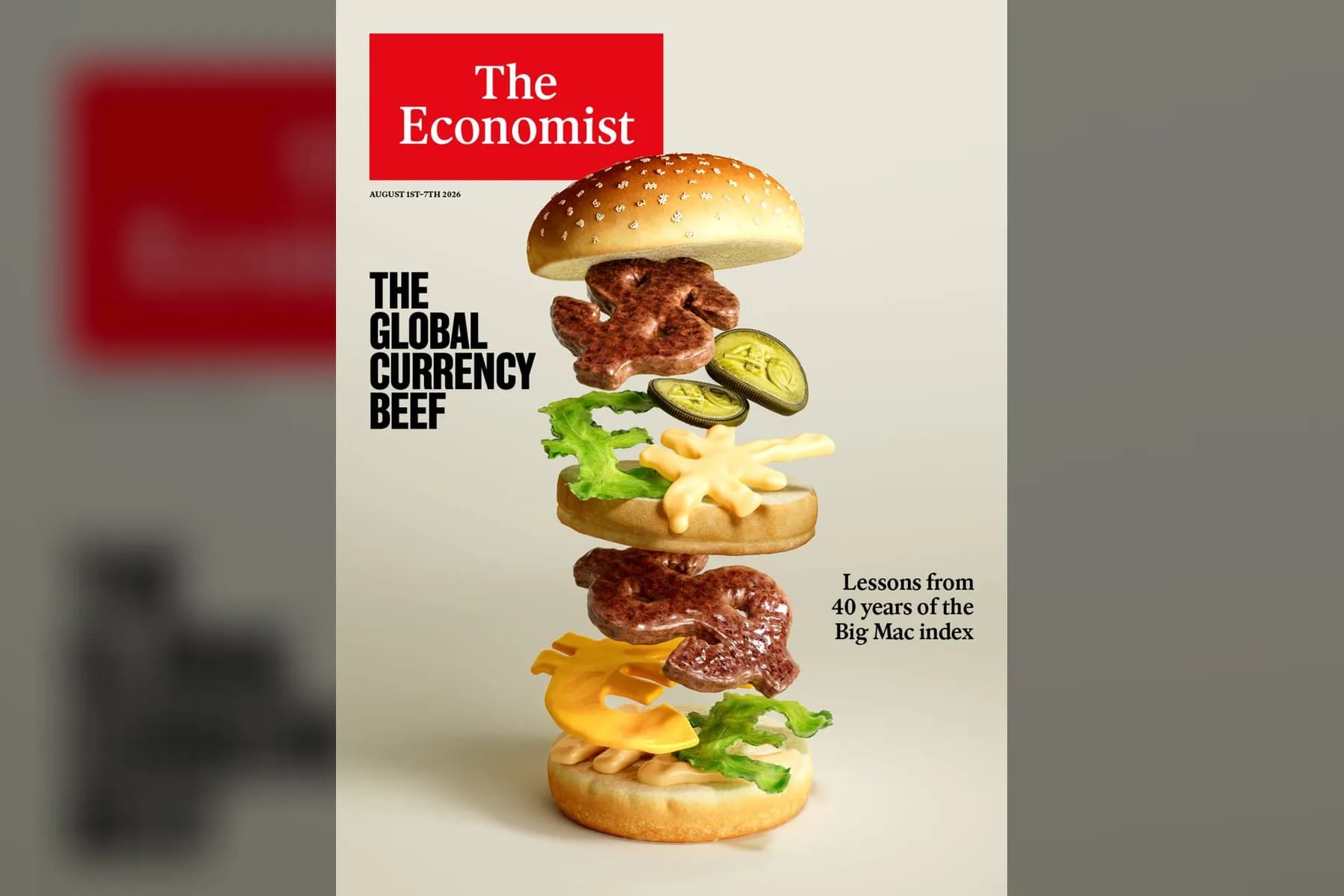
This issue repeatedly asks how uncertain claims should be measured. The Big Mac index uses a deliberately simple product to make currency misalignment visible. Its persistence after 40 years also shows the limits of diagnosis: demonstrating that currencies are mispriced does not supply a painless mechanism for correcting global imbalances.
The report on deaths after USAID’s closure confronts a much higher-stakes counterfactual. Elon Musk’s claim of “zero point zero” deaths is not credible, because abrupt cuts closed services and disrupted transport, nutrition and treatment. An estimate of 14m deaths by 2030 also rests on assumptions that no longer match the policy, because some programmes survived under other agencies. The honest conclusion lies between a politically convenient zero and a mechanically extrapolated catastrophe.
This is not an argument for abandoning estimates. Without them, distant suffering is easily ignored. It is an argument for making causal assumptions visible and updating them when implementation changes. A number should concentrate judgment, not end it.
The same rule applies to AI-writing detectors, market prices and economic indices. Each compresses complicated evidence into a usable signal. None can settle questions its design excludes. Measurement is most trustworthy when institutions preserve the underlying data, disclose uncertainty and allow decisions to be challenged.
6. Maintenance is political because its costs are distributed
The recovery of the Yangzi river shows that concentrated state capacity can achieve remarkable repair. Since a ten-year commercial fishing ban began in 2021, estimated fish biomass has risen by more than 200%. Factories were moved, forests planted and enforcement strengthened through patrols, cameras, fines and promotion targets for officials.
The result deserves attention, but so does the method. Fishers lost livelihoods, compensation and consultation were uneven, and a top-down system that can enforce ecological rules can also ignore local knowledge. “Eco-authoritarianism” solves one collective-action problem by weakening mechanisms through which affected people contest the solution.
This is the political core of maintenance. Upgrading encryption imposes costs on organisations with old equipment. Fire prevention restricts construction and land use. Defence readiness competes with civilian spending. Fraud enforcement demands skilled public employees whose successes rarely make headlines. The question is not merely whether maintenance produces a positive aggregate return, but who pays now, who benefits later and who can appeal when the programme is badly designed.
Durable systems therefore need two kinds of capacity at once: the ability to act before failure and the ability to correct action without waiting for failure. A state that can impose but not listen may repair quickly and unjustly. A state that can debate but not implement may recognise every risk and still leave it accumulating.
Reservations about this issue
The reservation about this issue is that The Economist often treats maintenance as a problem that better incentives, clearer prices and more competent experts can solve. Those ingredients matter, but they do not remove conflict.
There is no politically neutral allocation of wildfire protection, defence spending or post-quantum upgrades. Protecting one place or system first means leaving another exposed for longer. Nor is every legacy institution worth preserving. “Resilience” can become a flattering word for subsidising incumbents, retaining obsolete infrastructure or asking vulnerable people to absorb adjustment in the name of stability.
The magazine is also more confident diagnosing institutional decay than specifying how capacity is rebuilt. Calling for more white-collar enforcement does not produce experienced prosecutors quickly. Asking Asian allies to strengthen American commitment does not explain how they should respond when American domestic politics rewards unpredictability. Advising organisations to patch old devices does not determine who pays when manufacturers have disappeared.
Maintenance should therefore be judged by more than technical success. It needs a retirement rule for systems that no longer deserve repair, a financing rule that does not push costs onto the least powerful, and an accountability rule for failures created in the name of prevention.
Four things to keep watching
- Whether post-quantum adoption spreads from browsers and cloud front ends to back-end servers, medical devices and other difficult legacy systems;
- Whether Japan, Australia and the Philippines turn higher defence spending into interoperable capabilities and clearer American commitments rather than parallel national programmes;
- Whether America’s surge in self-employment produces durable, productive firms—and whether white-collar enforcement recovers before a market downturn exposes a large stock of hidden fraud;
- Whether AI evaluation shifts from detecting stylistic fingerprints to verifying sources, claims and accountability as machine-written prose becomes harder to distinguish.
The lasting judgment from this issue is that a society does not become resilient by predicting the exact date of the next shock. It becomes resilient by reducing the number of ordinary, neglected weaknesses through which any shock can spread. Invention expands what is possible. Maintenance decides whether those possibilities become shared progress or accumulated risk.
Expressions worth taking away
This issue is especially rich in expressions for describing preparedness, uncertain forecasts and the relationship between evidence and responsibility. The following 10 expressions can carry a clear argumentative function. All examples are newly written rather than reproduced from the magazine.
1. make a world of difference
Function: Cause and effect
Meaning: To produce a very large and noticeable improvement or change. It is common rather than highly formal, but still works well in analytical prose.
A reliable bus connection would make a world of difference to workers on the edge of the city.
Use make a world of difference to a person or system, or make a world of difference in a situation. It is stronger than help and should be reserved for material effects.
2. battle-tested
Function: Hedging
Meaning: Proven through demanding practical use rather than merely in theory. The military metaphor is now common in technology, policy and business.
The new payment protocol is promising, but it is not yet battle-tested across a severe financial crisis.
The expression supports a cautious distinction between plausible and proven. It does not mean flawless.
3. do not bank on it
Function: Hedging
Meaning: Do not rely confidently on a desired or predicted outcome. The tone is conversational and slightly emphatic.
Inflation may fall without another interest-rate rise, but businesses should not bank on it.
Use it after mentioning a possibility that remains too uncertain to guide plans. In more formal prose, should not be assumed is a neutral alternative.
4. stand up for
Function: Contrast
Meaning: To defend a person, group or principle when doing so requires effort or carries a cost.
A treaty has little value if members will not stand up for one another under pressure.
Stand up for implies active defence, unlike support, which may describe only an opinion.
5. put a premium on
Function: Cause and effect
Meaning: To make a quality, skill or resource more valuable or important because circumstances have changed.
Cheap automated analysis puts a premium on people who can frame the right question.
The subject is usually a condition or trend; the object is the capability whose relative value rises.
6. on course for
Function: Data description
Meaning: Likely to reach an outcome if the current direction or rate continues.
At the present rate, the programme is on course for its highest annual enrolment in a decade.
This is a projection, not a guarantee. Include the trend or assumption when it is not already obvious.
7. lay something at the feet of
Function: Cause and effect
Meaning: To assign responsibility or blame for an outcome to a person, institution or event. It often signals that the attribution may be too simple.
It would be misleading to lay the entire housing shortage at the feet of recent migration.
The expression is most useful when examining contested causation. Attribute to is less figurative and more neutral.
8. back-of-the-envelope
Function: Hedging
Meaning: Based on a quick, rough calculation using limited information rather than a complete model.
A back-of-the-envelope estimate suggests that the subsidy will cost at least twice the official figure.
It can describe a useful first approximation, but it should not be presented as precise evidence.
9. come back from the brink
Function: Contrast
Meaning: To recover after coming very close to destruction, collapse or irreversible failure.
The wetland has come back from the brink after decades of pollution and water diversion.
Because the brink implies an extreme condition, the phrase is too dramatic for an ordinary improvement.
10. fall short
Function: Contrast
Meaning: To fail to reach a target, standard or need, even when some progress has been made.
The new disclosure rules are welcome, but they fall short of giving investors a clear picture of ownership.
Use fall short of before a noun or -ing form. It is useful for qualified criticism because it can acknowledge effort without overstating success.
Putting the expressions back into an argument
Post-quantum encryption could make a world of difference to long-term data security, but the new standards are not yet fully battle-tested. Organisations should not bank on unsupported devices remaining safe. Rapid migration will put a premium on accurate inventories, and current adoption figures suggest that back-end systems may still fall short of what a credible transition requires.
The paragraph begins with the scale of the potential benefit, then uses battle-tested and should not bank on to introduce two different cautions. Put a premium on identifies the capability made more valuable by the transition, while fall short of compares present adoption with the required standard.
This article was prepared by an agent from The Economist’s August 1st 2026 issue.
Conversation
Discussion
Loading responses…