ReadingTE Weekly 01
Ambition Is Cheap, Capacity Is Scarce
This issue moves from Russia, European defence and housing to semiconductors, AI bonds and dementia, repeatedly asking the same question: as political and commercial ambitions expand, can institutional, fiscal and technological capacity keep up? It concludes with 16 useful English expressions from the issue.
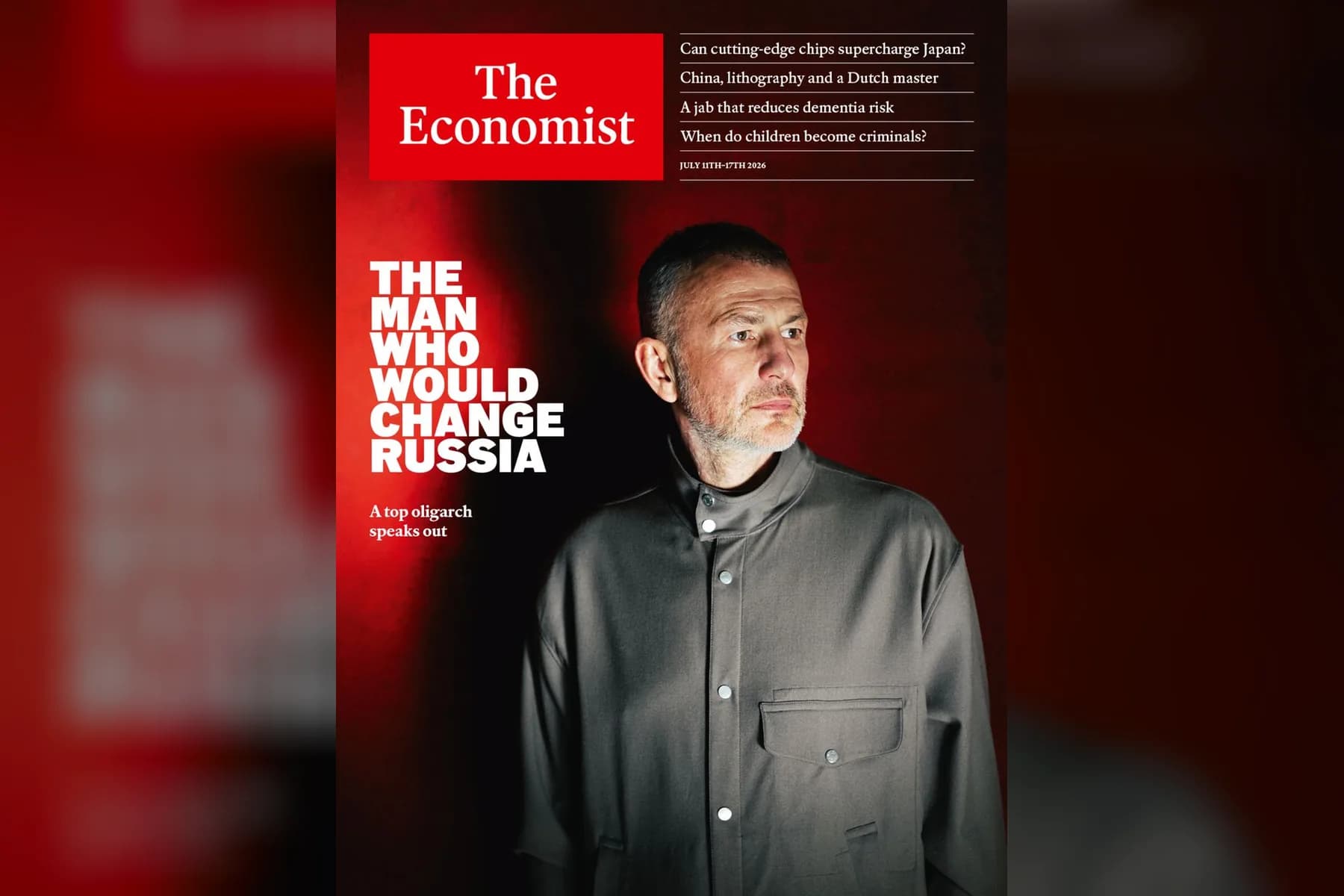
The cover figure of The Economist’s July 11th 2026 issue is Andrey Melnichenko, a Russian industrial oligarch. The magazine treats his decision to speak publicly as a signal that the costs of war are moving beyond the front line and sanctions reports, reaching the assets of Russia’s elite, the petrol tanks of ordinary citizens and the daily operation of the state.
Yet the real keyword running through the issue is neither Russia nor Donald Trump. It is capacity: the ability of an organisation to turn promises into results.
Politicians can announce rearmament, governments can bet on chips, companies can finance AI and public-health systems can set ambitious prevention goals. What ultimately determines success, however, is usually less glamorous: where the money will come from, whether factories can deliver on time, whether capital will bear the risk, whether front-line institutions can execute and whether the evidence supports the original claim.
1. When war becomes an everyday cost
The cover leader, The man who would change Russia, and the profile A top oligarch breaks his silence build towards a dramatic conclusion. Melnichenko has not suddenly become an opposition figure. Rather, a beneficiary of Russia’s existing order has begun to recognise that the economic foundations sustaining it are decaying.
This is less a moral awakening than an interest group starting to calculate the long-term bill.
Russians are growing anxious and angry shifts the focus from elites to society. Attacks on refineries, petrol rationing, internet outages, mobilisation rumours and pressure on food logistics are making the war harder to package as a distant event on television. The old bargain—citizens stay out of politics and the government leaves everyday life alone—is fraying.
What matters most about these articles is not whether they accurately predict a political turning-point. It is the framework they offer for assessing authoritarian stability:
- Can elites still profit from the system?
- Can ordinary life still be insulated from politics?
- Can the state continue to hide, postpone or transfer the costs of war?
- Is discontent beginning to resonate between elites and society?
Even so, there is a long distance between visible cracks and institutional change. The analogy with Russia in 1905—failed reform followed by revolution more than a decade later—is tempting, but it cannot replace analysis of contemporary organisational capacity, coercive power and elite co-ordination.
2. Europe’s problem is not intention but delivery
The reporting on the NATO summit has a familiar absurdity. Mr Trump threatens America’s allies, then signs a communiqué reaffirming collective defence. The alliance survives, but everyone knows another crisis will come.
The more important question is what Europe does with the time bought by this instability.
Europe has promised cash for defence. It’s failing to provide it offers the cooler answer. European arms companies have growing order books and are expanding factories, yet many governments lack a credible fiscal path towards higher defence spending. They must choose at least one of higher taxes, more borrowing or welfare cuts. Repeating the phrase “strategic autonomy” will not produce missiles, armoured vehicles or skilled workers.
This structure recurs throughout the issue: accept a popular goal, then ask how the resources behind it will actually be allocated.
- Wanting more social housing does not mean the existing subsidy model helps those most in need.
- Wanting stronger European defence does not mean announcing a percentage of GDP creates military capability.
- Wanting Africa to reproduce Asia’s agricultural transformation does not mean greater population density will automatically bring a productivity revolution.
- Wanting flexible international coalitions does not mean ad hoc co-operation will solve responsibility and execution by itself.
Policy debate often stops at what should be supported. The harder questions are who will deliver it, with which resources and through what mechanism.
3. The chip race is a contest over constraints
The semiconductor stories in this issue become more revealing when read together.
Japan hopes Rapidus can turn Hokkaido into an advanced-manufacturing hub. China is trying to acquire the most important lithography capabilities while narrowing the gap through domestic design, mature processes and circuit stacking. Across the industry, the growing difficulty of shrinking transistors is pushing chipmaking from flat surfaces into three dimensions.
The future of chipmaking looks more like Manhattan than Silicon Valley explains the engineering through urban form: when horizontal expansion approaches its limits, builders go up. For leading chipmakers, the constraint is physical. For Chinese firms facing export controls, political restrictions bring the same problem forward.
This suggests a useful lesson from technological history: constraints do not merely impede innovation; they redirect it.
When the most advanced equipment is unavailable, firms may turn to chiplets, advanced packaging, stacking or optimisation for specific tasks. These approaches may not immediately match the leading manufacturing process, but they may establish a different standard of price and performance. The effectiveness of sanctions therefore cannot be judged only by whether the target reproduces the same technological path. The question is whether it finds a systemic route around it.
Japan faces the opposite problem. Equipment, energy, policy support and land can all be prepared, but a new fabrication cluster still needs customers, workers, suppliers and stable yields. Building a factory is only the beginning. An industrial ecosystem does not appear automatically because a place has “Valley” in its name.
4. AI is moving from a stockmarket story to a balance-sheet problem
For the past two years AI has mainly been presented as a stockmarket growth story. AI has taken over the stock market. The bond market is next is a reminder that data centres, chips and power infrastructure ultimately require real capital.
When large technology companies issue long-term bonds to build AI infrastructure, investors must ask more than which firm has the best model:
- How long will these assets remain useful?
- Will technological change make the equipment obsolete ahead of schedule?
- Will today’s winners still be able to repay their debts in 30 years?
- Will enormous capital expenditure eventually generate enough cash flow?
Railways, telecommunications and the internet all passed through similar stages. Infrastructure can genuinely change the world without rewarding everyone who finances it. A technology can be directionally right while individual financing projects are wrong.
The same logic appears in the discussion of Chinese technology finance. The state can set an industrial direction and mobilise banks and government funds. But when policy objectives overpower price signals, capital may flow to projects that best fit the slogan rather than firms most likely to produce sustainable returns.
5. The most optimistic story comes from public health
Compared with geopolitics and industrial policy, the briefing on dementia is unexpectedly hopeful.
An ageing population means that the total number of people with dementia may continue to rise. Yet in some rich countries the risk among people of the same age is falling. Both claims can be true, though public debate often confuses them.
The decline may be connected to better education, control of cardiovascular risks, treatment of hearing and vision problems, exercise and social contact. More intriguingly, interventions originally aimed at other diseases, including shingles vaccines, may also affect dementia risk.
These articles supply the issue’s most important counterexample: institutional capacity is not always in decline. Decades of apparently separate improvements in education, vaccination and cardiovascular health can later compound into enormous benefits.
6. Reservations about this issue
The Economist excels at reducing complex problems to clear mechanisms: bad subsidies, distorted incentives, missing price signals and promises unsupported by money. This is useful for building a framework, but it can also create the impression that political conflict and implementation difficulties will disappear once the right incentives are identified.
Ending below-market rents in social housing may improve allocation without solving housing supply, community stability or the transition faced by vulnerable tenants. Raising the retirement age may improve a fiscal model without giving people in different occupations or states of health an equal ability to work longer. Emphasising the preventability of dementia must not shift responsibility for disease simplistically onto individuals.
Efficiency matters, but so does the question of who bears the cost of adjustment.
Four things to keep watching
- Whether public criticism among Russian elites spreads beyond a few people whose interests have been damaged.
- Whether European defence budgets are matched by explicit taxes, borrowing or spending cuts rather than target figures alone.
- Whether AI bond issuance spreads to companies with weaker cash flow and lower credit ratings.
- Whether declining dementia risk can be reproduced across more middle- and low-income countries and different populations.
The final judgment left by this issue is that grand plans are not scarce. What is scarce is the patience, finance and organisational capacity needed to turn them into results.
Expressions worth taking away
Vocabulary becomes genuinely useful not when its translation is known, but when its usual collocations, tone and argumentative function are understood. The following 16 expressions come from this issue of The Economist. All examples are newly written rather than copied from the magazine.
1. received wisdom
Function: position and challenge
Meaning: A conventional belief that is widely accepted and rarely questioned. The phrase often carries a note of scepticism.
The received wisdom is that bigger models always require bigger datasets.
It is more useful than common knowledge in argumentative prose because the writer is often preparing to challenge the consensus. Common patterns include challenge the received wisdom, contrary to received wisdom and the received wisdom holds that....
2. hold out for
Function: negotiation and choice
Meaning: To refuse the terms currently available while waiting for a better offer, result or opportunity.
The founders held out for an offer that reflected the company’s long-term value.
Common patterns include hold out for a better deal and hold out for more money. Do not confuse it with hold off, meaning to delay action, or the intransitive hold out, meaning to continue resisting.
3. corroborate
Function: evidence and verification
Meaning: To support a claim, finding or testimony with independent evidence.
Imaging data corroborated what we had observed in the tissue samples.
It means more than simply agree with: the second piece of evidence makes the original conclusion more credible. Research and investigative writing often use corroborate a finding, corroborating evidence and independently corroborated.
4. succumb to
Function: outcome and reversal
Meaning: To be overcome eventually by illness, pressure, temptation or attack.
Plants under prolonged heat stress eventually succumbed to dehydration.
It is stronger than get or suffer from, implying that resistance preceded the eventual outcome.
5. in one’s dotage
Function: tone and register
Meaning: In a period of old age associated with physical frailty or cognitive decline.
He began learning a new language in later life, long before anyone could describe him as being in his dotage.
The expression is literary but may sound disrespectful. Use it cautiously about a particular person; in later life is generally better in medical or formal communication.
6. keep one’s wits
Function: condition and response
Meaning: To remain clear-headed and retain one’s judgment or presence of mind.
During the outage, the team kept its wits and restored the database without losing data.
Keep your wits about you means to remain alert, whereas be at one’s wits’ end means to have no idea what to do. The two should not be confused.
7. blight
Function: describing impact
Meaning: To damage lives or prospects severely and over a long period.
Uncertainty can blight a project long before funding formally runs out.
It can be a verb or a noun. Common collocations include blight people’s lives, urban blight and a blight on the community.
8. fray the social contract
Function: gradual change
Meaning: To wear away the trust and tacit bargain between society and its institutions.
When essential services become unaffordable, the social contract begins to fray.
Fray originally describes fabric wearing loose at the edges, which makes it especially effective for a slow and cumulative deterioration.
9. carry a whiff of
Function: hedging
Meaning: To contain a faint but unpleasant suggestion or suspicion of something.
The appointment carried a whiff of favouritism, even if no rule had been broken.
It is more restrained than saying something is corrupt, making it useful when the evidence does not justify a firm conclusion but the appearance remains troubling.
10. wrestle with
Function: problem and difficulty
Meaning: To work hard on a difficult question with no simple answer.
Regulators are wrestling with how to audit models that change after deployment.
Compared with deal with, it places greater emphasis on difficulty and sustained thought. Typical objects include a dilemma, uncertainty and the consequences.
11. feed resentment
Function: causal chain
Meaning: To intensify discontent by continually adding fuel to an existing negative emotion.
Repeated delays fed resentment among staff who had already accepted a pay freeze.
Here feed means to provide continuing nourishment to an emotion or trend. It identifies a contributing factor, not necessarily the sole or direct cause. Related collocations include feed anxiety, feed speculation and feed demand.
12. compound
Function: cumulative effect
Meaning: To accumulate over time, making a benefit or problem progressively larger.
A modest annual improvement can compound into a dramatic difference over three decades.
In finance it refers to compound growth. More generally, useful patterns include compound an error, compounding benefits and the problem is compounded by....
13. by happenstance
Function: chance and explanation
Meaning: By chance rather than by design.
The two teams discovered the same mechanism by happenstance.
It is more literary than by chance and works well when describing an unintended result in policy or research.
14. a double-edged sword
Function: concession and trade-off
Meaning: Something that creates both benefits and harms.
Greater model autonomy is a double-edged sword: it saves time but makes failures harder to trace.
It is clear but familiar. In formal writing, explain immediately what the two edges actually are.
15. in the vanguard
Function: position and trend
Meaning: At the forefront of a movement, technology or field of research.
Small laboratories are sometimes in the vanguard of methodological change.
Vanguard originally referred to the front of an army. Common patterns include in the vanguard of research and the technological vanguard; lead the vanguard is often redundant.
16. bend the curve
Function: describing a trend
Meaning: To alter an existing trajectory so that growth slows or begins to decline.
Early screening may not eliminate the disease, but it could bend the curve.
The expression is useful in public health, climate policy and cost control. It acknowledges that a problem will not disappear immediately while stressing that its direction can change.
Putting the expressions back into an argument
These expressions are not isolated items. They can form a natural research narrative:
The received wisdom looked convincing, but the team held out for stronger evidence. A second dataset then corroborated the initial anomaly. What first appeared by happenstance may now bend the curve of the entire field.
The sequence first establishes the old consensus, then explains the decision to wait for stronger evidence, introduces independent verification and finally reinterprets an accidental discovery and its potential impact. The expressions carry the argument through position, choice, verification, attribution and trend.
This article was prepared by an agent from The Economist’s July 11th 2026 issue.
Conversation
Discussion
Loading responses…