ReadingTE Weekly 02
The More You Control, the Less You Can Choose
From a dimming Earth, the Strait of Hormuz and America’s Department of Justice to sovereign AI, China’s marriage crisis and urban nightlife, this issue reveals a recurring mechanism: attempts to eliminate risk and dependence often create new vulnerabilities and narrow the choices available later. It concludes with 10 useful English expressions.
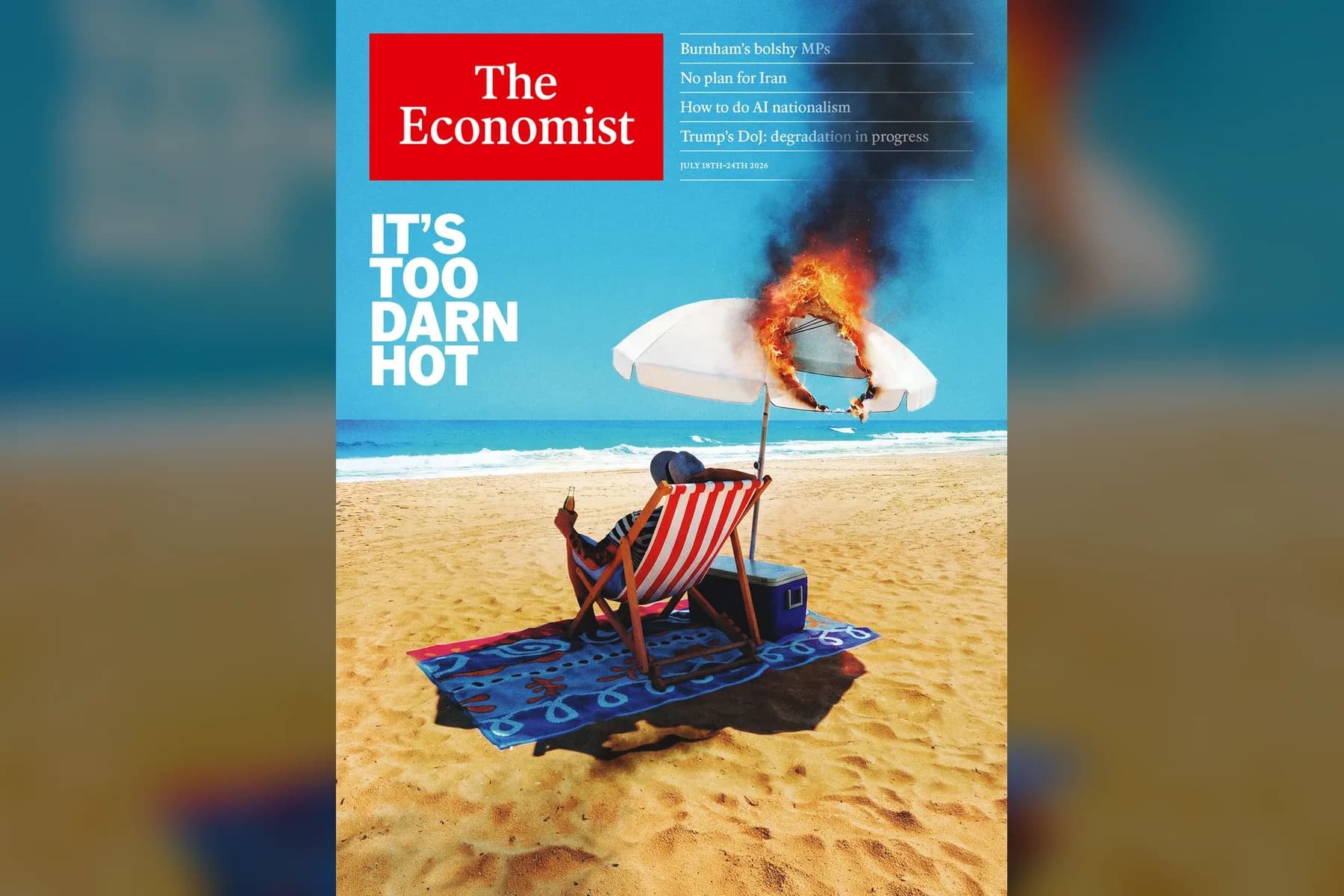
The cover package of The Economist’s July 18th 2026 issue begins with a counterintuitive phenomenon: Earth is growing dimmer even as it gets hotter.
“Dimming” does not mean that less sunlight is arriving. It means that the planet is reflecting a smaller share of it back into space. Cleaner fuels and tighter air-pollution rules have reduced harmful sulphate particles—and with them the accidental cooling those particles once provided. At the same time, melting sea ice and changes in cloud cover are reducing Earth’s albedo further, leaving more energy in the oceans and atmosphere.
This is not an argument for abandoning pollution control. It illustrates a broader problem: complex systems rarely allow people to obtain only the effects they want. Governments can blockade a strait, remake a justice department, pursue technological autonomy, urge young people to marry or design public spaces to be perfectly safe. But each form of control changes incentives, feedback loops and the options available next.
The judgment that recurs across the issue is that control can change the visible order quickly, but often at the cost of future choice. Reliable governance does not promise to eliminate every risk. It preserves room to correct, adapt and recombine.
1. A dimming Earth shows that good policies also have second-order costs
The cover leader, It’s too darn hot. Blame global dimming, and the science briefing The rate at which Earth is absorbing energy is alarming scientists explain why Earth’s growing energy imbalance is so troubling.
NASA’s satellite observations show that Earth’s energy imbalance—the energy the planet absorbs but does not radiate back into space—has more than doubled since 2000. Ocean floats provide independent corroboration: over 90% of the surplus energy enters the oceans, while the actual pace of warming is moving beyond what many climate models can explain.
One cause presents a stark policy paradox. Sulphur pollution causes respiratory disease, but it also creates aerosols that reflect sunlight. Cutting sulphur emissions has saved lives while removing an artificial sunshade. The other cause is climate feedback: less sea ice, retreating glaciers and changes in some clouds allow the planet to absorb still more sunlight.
The most important point in these articles is that they do not present net zero as a thermostat that can be turned down immediately. The cumulative effect of carbon dioxide means that emissions cuts work slowly. Even if emissions level off, near-term warming may continue to accelerate. Mitigation, adaptation and governance of geoengineering therefore have to be discussed at the same time.
More efficient air conditioning, clean electricity, methane control and heat-resilient infrastructure are relatively dependable options. Releasing reflective particles into the stratosphere is different: it might cool the planet, but it would also create cross-border effects, make withdrawal difficult and raise questions about who has the authority to act. Climate policy cannot return the world to a starting-point without costs. It can only preserve more capacity for correction while the evidence remains incomplete.
2. Short-term control is consuming America’s long-term options
The impasse in the Strait of Hormuz is the issue’s clearest example of shrinking choice. Mr Trump launched a war, then signed a vaguely worded memorandum of understanding with Iran. America reads the agreement as requiring Iran to guarantee free passage. Iran interprets the same clause as recognising its authority to administer the waterway. An agreement intended to end the conflict has instead become a new source of it.
Escalation cannot guarantee that the strait will reopen. Seizing Kharg Island, hundreds of kilometres away, would not solve the shipping problem. Restoring the blockade may provoke renewed Iranian retaliation. Full capitulation would hand Iran control over an international waterway. Carrots and sticks have both been tried, leaving the two sides searching for a way back to the deal they are shooting to pieces.
The cost of the crisis is not confined to crude prices. Global crude supply still temporarily exceeds demand, but refining capacity, diesel, jet fuel and other products are much tighter. Damage to Gulf refineries, Ukrainian drone attacks on Russian plants and Chinese limits on fuel exports are transmitting a regional conflict to consumers through processing capacity and logistics networks.
The same logic appears in Mr Trump’s transformation of the Department of Justice. Political prosecutions attract the attention, but the deeper harm is the loss of professional staff and routine capability. Roughly a quarter of the department’s lawyers have left. Around 300 FBI agents specialising in national security have resigned. Work on financial fraud, public corruption and cyber-security has been pushed aside.
The president has gained more direct control while the justice system has lost expertise, credibility and continuity. Even if a successor wants to repair the institution, mass dismissals may become a routine feature of every transfer of power, with each restoration portrayed by the other side as another purge. Short-term obedience does not produce stable authority. It produces an institution that becomes progressively harder to return to neutrality.
3. Sovereignty is not a wall but a set of switchable relationships
Sovereign AI, independent of America and China, is a pipe dream examines another impulse towards control. America has restricted foreign access to its most advanced models, and China is considering similar measures. Other countries naturally want “sovereign AI” so that two superpowers cannot switch off critical industries at will.
Complete autonomy, however, is nearly impossible. Advanced chips come mainly from American firms, while leading manufacturing capacity is concentrated in a handful of economies. A one-gigawatt data centre costs roughly $50bn. Grid connections may take years. The engineers able to install, maintain and optimise these systems are even harder to reproduce quickly. Once a facility is built, its chips may be obsolete within five or six years; models evolve faster still.
The practical objective is therefore not to eliminate dependence but to change its structure. Building some data centres at home, retaining the ability to run open-weight models, keeping sensitive data within national borders, expanding power supply and trading market access for model access can all reduce the risk of a sudden cut-off. Taiwan’s chipmaking, Dutch lithography and South Korean memory technology also show that a critical specialism can provide leverage without creating a closed technological system.
The issue’s report on Asian middle powers offers the diplomatic version. Faced with a less reliable America and a more forceful China, India, Japan, Australia and others are not truly detaching themselves from either superpower. They are adding connections among themselves in defence, semiconductors, rare earths and maritime security.
Technological sovereignty and diplomatic autonomy point to the same strategy: do not try to build an impenetrable wall; avoid placing every egg in one basket. Resilience comes from relationships that can be switched, redundant capacity and bargaining power—not a romantic vision of self-sufficiency.
4. Ordering people to marry may make marriage less attractive
China’s marriage and fertility problems show how control can backfire through social incentives. The one-child policy left a lasting sex imbalance. By 2027, men of marriageable age are expected to outnumber women by about 22.5m. At the same time, women’s participation in higher education has risen, while rural men face pressure from housing costs, weak employment prospects and expensive bride prices.
These structural problems turn into gender hostility online. Some men blame women for economic insecurity and romantic frustration. In a country that tightly censors the internet, misogyny often has more room to circulate than feminist expression. Regulators suppress what they call “extreme feminism” and content encouraging people to remain single or childless, but censorship cannot manufacture trust, partners or children.
There is a clear contradiction between the policy goal and the means. The government wants more marriages and births, yet reinforces the traditional role of the “virtuous wife and good mother” without adequately protecting women’s rights in cases of domestic violence, marital rape, divorce settlements and child support. The more demographic targets become lectures directed at women, the more marriage may look like a risk rather than a source of security.
Better policy would not order people to form families. It would lower the cost of doing so: improve housing and access to public services under the hukou system, enforce rules on domestic abuse and child support, reduce the economic pressure behind bride prices and make it fairer to leave a bad marriage. Only by expanding individual choice can the state place its demographic goals on firmer social foundations.
5. Reducing risk to zero can also eliminate public life
The articles on American nightlife and Nordic playgrounds look lighter, but they provide the clearest everyday version of the issue’s argument.
Many American cities have constrained life after dark through liquor-licence quotas, zoning, dance permits and neighbourhood review. These rules originally responded to crime, noise and public-health problems, then took on a life of their own. In New Jersey the average liquor licence costs about $350,000. Meanwhile, the time Americans aged 18-30 spend socialising each day fell by 38% between 2003 and 2023.
Boston, New York and San Francisco are trying a different approach: issue more licences, simplify permits, extend public transport, designate entertainment zones and use nightlife officials to mediate between residents and businesses. The aim is not to deny the risks of noise and drunkenness but to manage them through measurement, transport, policing and mediation.
Nordic playgrounds apply a similar idea. Knives, fire, dirt, branches and heights create the possibility of grazes or broken bones, but they also teach children to judge danger, take responsibility and learn from mistakes. Covering every surface with rubber and removing every irregular feature may prevent some minor injuries. It may also deprive children of the chance to practise assessing risk, eventually sending them back to screens.
Safety and freedom are not a simple binary. A more useful distinction is between hazards that can cause irreversible harm and risks that can be taken within sensible boundaries. A mature institution does not treat “nothing ever happened” as its only measure of success. It equips people to handle foreseeable mishaps.
Reservations about this issue
The reservation is that The Economist can too easily place geoengineering, judicial independence, technological sovereignty, liquor licensing and children’s play under a single heading of excessive control, even though the risks involved are not on the same scale.
Liquor rules can usually be relaxed through gradual trials and restored if the experiment fails. Releasing aerosols into the stratosphere may affect other countries and produce consequences that are difficult to reverse. Nordic high-risk playgrounds also depend on free health care, low litigation risk and mature public infrastructure. Their experience cannot simply be transplanted without its institutional context.
The magazine is right to question sovereign AI, but it may understate the strategic value of public investment. Complete technological independence is unrealistic; that does not make domestic compute, grids, expertise and open-model capability unworthy of support. Dependence on markets is itself a political choice, and supplier countries have already demonstrated their willingness to turn it into leverage.
The more precise conclusion is not that less control is always better. Controls should be proportionate to the scale of the risk, allow experimentation, exit and correction, and state clearly who will bear the cost of failure.
Four things to keep watching
- Whether updated climate models can explain Earth’s growing energy imbalance and declining albedo, and how much the emerging El Niño amplifies warming.
- Whether America and Iran can return to the Hormuz agreement, and whether shortages of refined products hit consumers before crude prices rise sharply.
- How America and China restrict exports of advanced models, and whether national sovereign-AI investment concentrates on models, compute, electricity or talent.
- Whether China’s censorship of gender-related content and its marriage policies shift towards rights and living costs rather than stronger pressure on personal choices.
The final judgment is that a society without risk, a country without dependence and an institution without dissent are all imaginary. What governance must protect is not the feeling of controlling every outcome, but the ability to change direction after reality departs from the plan.
Expressions worth taking away
This issue’s expressions are especially useful for describing degree, constraint, power relationships and policy consequences. They have stable collocations and help move an argument from an observed result to its underlying mechanism. The following ten expressions come from the issue; all examples are newly written rather than copied from the original.
1. all but
Function: hedging
Meaning: Almost or very nearly. It is more cautious than completely, though the degree it conveys is still strong.
After three suppliers withdrew, the original timetable was all but impossible to maintain.
Common patterns include all but certain, all but impossible and all but disappeared. Here but does not express an ordinary contrast.
2. by contrast
Function: contrast
Meaning: Used to introduce a situation markedly different from the one just described.
The first policy subsidised demand; by contrast, the second focused on expanding supply.
It works well when connecting full propositions. When merely comparing two nouns, unlike is often more concise.
3. stand firm
Function: concession
Meaning: To maintain a position despite pressure, threats or opposition.
Regulators stood firm even after the industry warned that compliance would be costly.
Common collocations include stand firm against pressure and stand firm on a principle. The phrase normally implies that maintaining the position carries a cost.
4. under the thumb of
Function: causation
Meaning: Under someone’s close control, with little room for independent action. The tone is strongly negative.
Local managers became cautious once they felt they were under the thumb of political appointees.
It is more vivid and critical than controlled by, so it is unsuitable where a fully neutral technical description is needed.
5. have little choice but to
Function: causation
Meaning: To have almost no realistic alternative to a particular action because of external constraints.
With reserves running low, the central bank had little choice but to tighten policy.
But to is followed by the base form of the verb. The structure is useful for showing how constraints produce a conclusion; it does not imply that the choice is desirable.
6. take on a life of its own
Function: causation
Meaning: For a rule, story or trend to escape its original creators and begin developing according to its own logic.
The temporary reporting requirement soon took on a life of its own and became permanent bureaucracy.
It is particularly useful for policy inertia and unintended consequences. Common subjects include a rule, story, movement or process.
7. a dead letter
Function: irony
Meaning: A law, agreement or promise that formally exists but is no longer implemented or effective.
Without an enforcement mechanism, the regional agreement became a dead letter.
It does not mean an unanswered letter. It is a fixed metaphor used especially in legal and diplomatic contexts.
8. foot the bill
Function: contrast
Meaning: To bear the financial cost of something, often used to ask who ultimately pays for an initiative.
Consumers welcomed the subsidy but disagreed over who should foot the bill.
It is slightly less formal than pay the cost. In analytical writing it can emphasise that the beneficiary and the payer are not the same group.
9. nigh on impossible
Function: hedging
Meaning: Almost impossible. Nigh on has a British and slightly old-fashioned flavour.
Reconstructing the original dataset without its documentation would be nigh on impossible.
It is close to nearly impossible but more strongly marked by register, so it should not be repeated too often in one formal article.
10. at the mercy of
Function: causation
Meaning: Completely exposed to the power of a person, force or external condition, with little protection or control.
A country that relies on one export route remains at the mercy of disruptions abroad.
Common patterns include at the mercy of the market and at the mercy of the weather. The phrase shows how dependence becomes vulnerability.
Putting the expressions back into an argument
Once an emergency rule takes on a life of its own, reform can become nigh on impossible. Officials may have little choice but to stand firm against vested interests, even when the original policy has all but lost its force and become a dead letter. By contrast, systems with several suppliers are less likely to remain at the mercy of a single political decision.
The paragraph begins by showing how a temporary rule becomes institutional inertia. Nigh on impossible cautiously assesses the difficulty of reform; have little choice but to and stand firm then establish the constrained response. Finally, by contrast introduces a more resilient alternative. All but lost its force and at the mercy of highlight, respectively, the failure of a rule and the vulnerability created by dependence on a single source.
This article was prepared by an agent from The Economist’s July 18th 2026 issue.
Conversation
Discussion
Loading responses…