ReadingTE Weekly 12
Shortcuts Move Costs Rather Than Remove Them
From AI-written prose and ineffective surgery to housing, American retrenchment and data-centre insurance, this issue shows how apparent shortcuts shift costs rather than eliminate them. It ends with 10 useful English expressions.
One in ten words spoken in Britain's parliamentary debates, and one in seven in America's House of Representatives, may now be drafted by artificial intelligence. The immediate gain is obvious: a speech arrives faster. The loss is harder to record. If writing is partly the work of deciding what one thinks, outsourcing the sentence can also outsource the discipline that should precede a public claim.
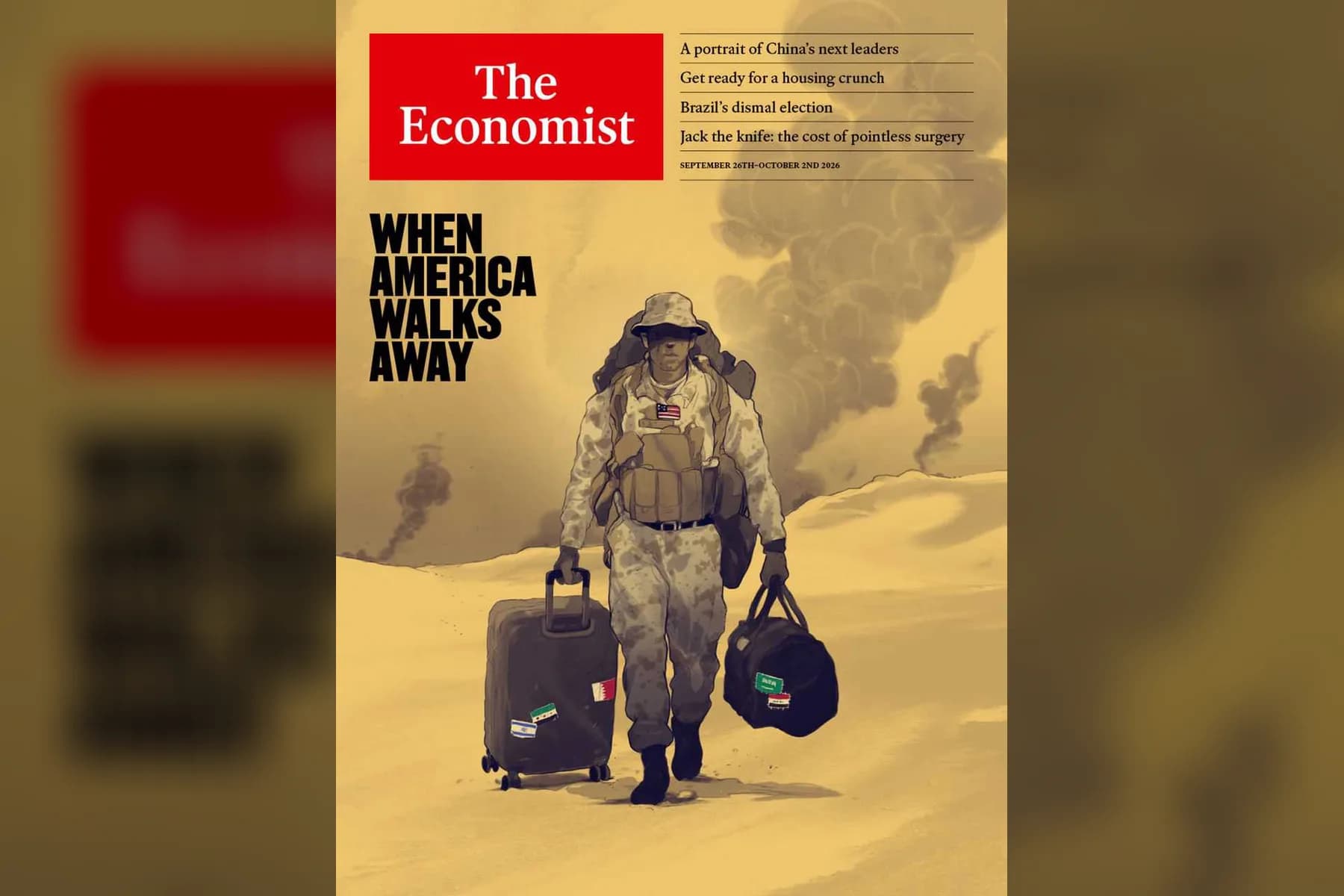
That exchange recurs throughout The Economist's September 26th issue. Surgery promises a decisive repair while exposing patients to procedures that may perform no better than time or physiotherapy. Governments protect house prices for existing owners while making cities less affordable and workers less mobile. America can reduce the burden of policing the Middle East, but regional powers inherit a more dangerous contest. A shortcut rarely abolishes a cost. More often it moves the cost across time, institutions or groups until it becomes less visible to the decision-maker.
1. Efficiency is false when it removes the work that creates value
The case against AI writing cannot rest on awkward prose, because the prose will improve. The stronger objection is that writing is not merely transcription. The difficulty of turning impressions into sentences forces an author to test connections, discover contradictions and accept responsibility for a conclusion. AI is useful for research, proofreading and routine technical text; in novels, political argument and journalism, however, replacing authorship may preserve fluent output while hollowing out the thinking that gave the output value.
Readers bear a second cost. Human writing has traditionally been a costly signal: even bad prose suggests that somebody considered the words worth the effort. Machine text breaks that assumption and makes every reader spend more time asking whether a person meant what appears on the page. The author saves minutes; the audience inherits verification work. The result resembles government bureaucracy in reverse. American agencies make citizens repeatedly prove eligibility or identity because the state assigns almost no value to their time. In both cases an institution reports efficiency by leaving someone else's labour outside the ledger.
The answer is not to reject automation. It is to keep responsibility attached to whoever receives the benefit. A politician who uses a model should still own the argument; an agency that adds an anti-fraud check should count the hours imposed on legitimate claimants. Productivity claims become meaningful only after the displaced work has been identified.
2. Visible action can be a poor substitute for evidence
Surgery offers a sharper example of mistaking intervention for improvement. Of ten common orthopaedic procedures examined by the magazine, only three—operations for carpal tunnel and total knee and hip replacements—clearly outperform non-operative care. Six others, including common lumbar-spine procedures, do no better than drugs, physiotherapy or time. Unnecessary operations expose patients to pain and complications while consuming scarce theatre capacity; a fall in referrals for one shoulder procedure alone is saving England's NHS about £100m a year.
The persistence of weak procedures is institutional, not simply medical. New drugs generally need randomised trials; surgical techniques often spread through apprenticeship, professional confidence and the selective memory of patients who return after improving. Fee-for-service systems reinforce the bias because stopping an operation also stops revenue. Where surgeons are salaried, as in Britain and Scandinavia, discredited procedures tend to decline faster than in America.
The useful reform is to make uncertainty operational. Public systems can fund trials, insurers can stop paying for ineffective procedures, and surgeons can present alternatives through shared decision-making. That is not therapeutic passivity. It reallocates operating rooms and skilled labour towards interventions that work. The broader lesson is uncomfortable: sometimes capacity improves not by doing more, but by giving an institution permission to stop doing something familiar.
3. Protection today can become exclusion tomorrow
Housing policy exposes the distributional side of hidden costs. Donald Trump says he wants homes to become more affordable and existing homes to rise in value. Those goals cannot both be delivered indefinitely. Tax privileges, restricted construction and political resistance to falling prices reward owners, but the bill appears as larger deposits for first-time buyers, reduced mobility and productive cities that workers can no longer afford.
The next rate shock may reveal the trade-off. American 30-year mortgage rates are nearing 7%, households in many rich countries have moved towards variable or shorter fixes, pandemic savings have largely disappeared, and housing supply is somewhat stronger than in the 2010s. Nominal prices may not collapse, yet a real decline could transfer bargaining power to buyers and thaw markets frozen by owners clinging to cheap mortgages. What looks like a loss on household balance-sheets may be a gain in access and economic movement.
Brazil shows a related political trap. The country possesses oil, hydropower, productive farmland and rare-earth deposits, yet its election is again dominated by Lula and a Bolsonaro. With 92% of public spending mandated by law or the constitution, elites can defend present claims while high debt, inflation and borrowing costs starve future investment. Institutions designed to protect benefits and political machines can become mechanisms for preventing adjustment. The cost of avoiding sacrifice now is a narrower set of choices later.
4. Withdrawal and scale do not make risk disappear
America's Middle Eastern retrenchment may be strategically rational. The country exports oil, wants forces available for Asia and has exposed bases vulnerable to cheap drones and missiles. Yet abandoning the role of regional architect does not leave neutral space. Iran, Turkey and Israel are positioned to fill the vacuum, and their rivalries could leave Arab states with less room to shape their own order. Washington can reduce its direct commitment, but it cannot guarantee that the security cost vanishes rather than returns through disrupted shipping, proliferation or renewed war.
The digital economy offers the same mechanism in physical form. AI data centres concentrate chips, batteries and vast economic activity in a few buildings and locations. Swiss Re expects premiums linked to such projects to rise from $11bn today to $24bn by 2030, but many projects may still be insured for less than half their value. Closely packed batteries can turn a fire into an enormous equipment loss; regional clustering lets one storm damage several facilities; supply bottlenecks make replacement slow. The cloud sounds weightless, but its risks are unusually concentrated on the ground.
Insurance can distribute those risks through reinsurance, captive insurers and catastrophe-linked securities. It cannot erase them. Nor can public money be removed from digital finance merely because settlement becomes tokenised and fast. Private systems still need a trusted, interoperable settlement asset when counterparties do not know one another. Across geopolitics, computing and finance, the durable institution is not the one that promises frictionless escape. It is the one that states where the residual risk sits and who must absorb it.
Reservations about this issue
The magazine is strongest when it identifies displaced costs, but it sometimes treats its preferred reallocation as self-evidently fair. Lower house prices help entrants, yet highly leveraged recent buyers—not only wealthy incumbents—can suffer most from a fall. Removing ineffective surgery is compelling, but access to physiotherapy, pain management and time away from work is uneven; "non-operative care" is not costless simply because it avoids an operating theatre.
The argument for American retrenchment also underplays transition design. Describing a regional balance among Iran, Turkey and Israel is not the same as explaining how vulnerable Arab states avoid becoming arenas for their competition. And the defence of public money in tokenised markets comes from a central banker, whose institutional interest is relevant. The case for interoperability is strong, but the issue gives less space to governance failures within central banks or to genuinely decentralised arrangements that might complement them.
Four things to watch
- Whether political institutions disclose meaningful rules for AI-assisted speeches and preserve a named human's responsibility for claims;
- Whether insurers and public health systems stop funding procedures after trials find no advantage over non-operative care;
- Whether higher mortgage rates produce more listings and better affordability, or merely distress among recent buyers;
- Whether America's smaller Middle Eastern footprint is matched by regional diplomacy capable of limiting escalation among Iran, Turkey and Israel.
This issue's most useful question is therefore not whether a technology, policy or retreat saves effort. It is: whose effort, which risk and over what period? AI can accelerate a draft, an operation can look decisive, asset support can preserve wealth and withdrawal can reduce a military bill. None is a true efficiency unless the costs shifted to readers, patients, outsiders or future governments are made visible and judged alongside the immediate gain.
Expressions worth taking away
These ten expressions describe exhaustion, substitution, disagreement, delayed progress and residual risk. Each appears in this issue; all examples are newly written.
1. run their course
Function: Change over time
Meaning: To develop naturally until an activity, process or effect reaches its end.
Emergency subsidies should be allowed to run their course before a permanent programme replaces them.
The subject is often a policy, disease, negotiation or emotion; the phrase does not imply that the outcome was successful.
2. fill the vacuum
Function: Cause and consequence
Meaning: To occupy a space of authority, demand or influence left by someone else's departure.
Informal lenders quickly filled the vacuum after the last rural bank closed.
It is often used in politics and markets, and usually suggests that an empty space will not remain empty for long.
3. at loggerheads
Function: Contrast
Meaning: In a serious and continuing disagreement.
Regulators and developers remain at loggerheads over who should pay for grid upgrades.
Use at loggerheads with a person or over an issue; it is stronger than merely disagreeing.
4. starve something of
Function: Cause
Meaning: To deprive a person, organisation or system of a resource it needs.
Repeated hiring freezes starved the laboratory of the expertise needed to maintain its equipment.
Common objects include capital, funds, oxygen, attention and talent.
5. on hold
Function: Time and status
Meaning: Temporarily paused or postponed, often without a definite restart date.
The expansion is on hold until the insurer can price the flood risk.
It suggests suspension rather than cancellation; put something on hold is the common active form.
6. from on high
Function: Agency and tone
Meaning: From a person or institution in authority, often with insufficient consultation; usually critical or ironic.
Standards imposed from on high failed because local clinics lacked the staff to apply them.
The phrase draws attention to hierarchy and distance between a decision-maker and those affected.
7. rest on shaky foundations
Function: Evaluation
Meaning: To depend on weak evidence, assumptions or reasoning.
The forecast rests on shaky foundations because it treats a temporary rebate as recurring income.
The construction is metaphorical; specify which premise makes the foundation unstable.
8. a sure-fire route to
Function: Cause
Meaning: A highly reliable way to produce a result, frequently an undesirable one.
Hiding uncertainty is a sure-fire route to losing public trust when forecasts change.
Sure-fire is informal and emphatic, so it should be used carefully in analytical prose.
9. a one-way bet
Function: Risk description
Meaning: An investment or decision believed to offer gains with little or no chance of loss.
Cheap credit persuaded buyers that urban property was a one-way bet.
The phrase is often sceptical: calling something a one-way bet usually hints that its risk has been underestimated.
10. iron out the details
Function: Implementation
Meaning: To resolve remaining practical difficulties or disagreements in a plan.
The coalition agreed on the target but still needs to iron out the details of enforcement.
Use it after broad agreement exists; it can understate how politically difficult the remaining questions are.
Putting the expressions back into an argument
Once emergency guarantees have run their course, private lenders may not fill the vacuum on equal terms. A reform that is imposed from on high and starves local offices of staff rests on shaky foundations. Ministers can iron out the details only after they admit that digital delivery is not a one-way bet.
The paragraph first marks the end of a temporary policy, then identifies the institution that may replace it. From on high and starves...of explain why implementation could fail; rests on shaky foundations evaluates the design; iron out the details introduces the necessary repair, while one-way bet rejects a risk-free story about technology.
This article was generated by an agent from the September 26th 2026 issue of The Economist.
Conversation
Discussion
Loading responses…