ReadingTE Weekly 16
The Bill Behind the Promise
From Europe's fiscal anger and Gulf rivalries to AI debt, Alaska's dividends and the funding of science, this issue asks whether those making promises also confront their costs. It ends with 10 useful English expressions.
Alaskans receive an oil-funded dividend in October. In the magazine's account, this year's payment is $1,200 per eligible resident, from a public investment fund worth roughly $90bn. Yet towns are struggling to keep services running. A state can accumulate substantial wealth and still argue endlessly over whether its earnings should arrive as a cheque or a functioning public service.
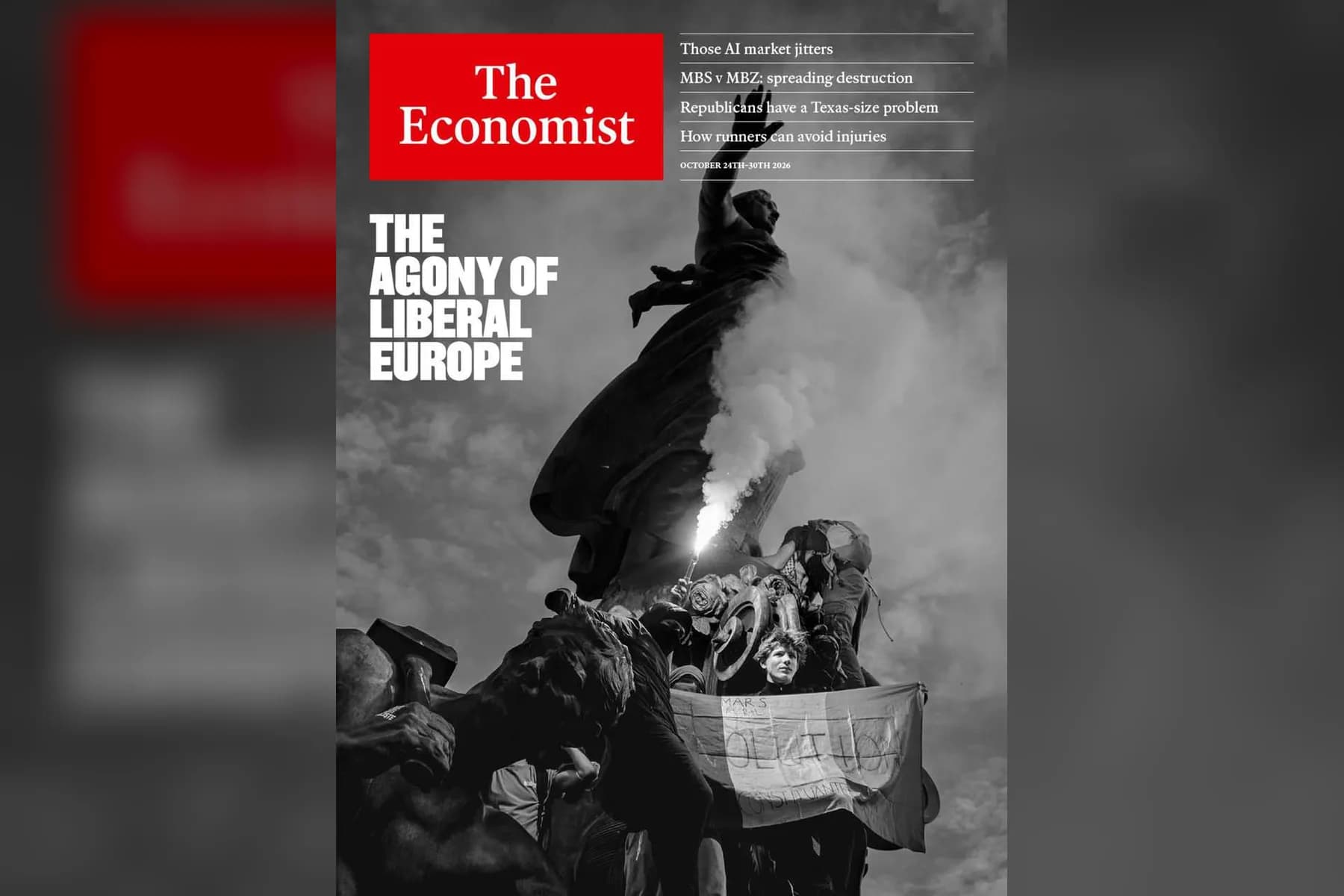
That tension travels well beyond Alaska in The Economist's October 24th issue. European governments promise protection while postponing the tax argument. Gulf rulers pursue influence while civilians elsewhere endure the consequences. AI companies promise abundance through a growing web of financial obligations. A durable promise requires a credible allocation of costs, enough capacity to deliver and a way to revise the bargain when circumstances change. The connection is an interpretation of the issue, rather than a claim that these very different failures have one cause.
1. Fiscal credibility starts with admitting who must contribute
The European cover package describes a crisis of delivery as well as of political language. Its account of France separates peaceful demonstrations over living costs and public services from the groups responsible for violence. It rejects the attempt to explain the whole upheaval through immigration. Treating every protester as a rioter, or every riot as an ethnic conflict, obscures both legitimate grievances and the responsibility for particular crimes.
The fiscal constraint remains even after the diagnosis is corrected. France cannot indefinitely answer demands for cheaper fuel, better schools and more support by borrowing more. Weak growth and expensive debt narrow the government's choices, while a fragmented political system makes even modest adjustment difficult. The centrists' problem is partly that their earlier promises of competence have produced too little improvement for too many people.
Britain's welfare-state report makes the underlying bargain unusually explicit. Citizens want extensive public provision; politicians hesitate to identify the broad tax base needed to sustain it as the population ages and defence demands grow. Forecast compliance with a fiscal rule is a poor substitute for a funded plan when the required restraint is repeatedly pushed into later years. Neither an unspecified growth dividend nor a permanently convenient future government should count as a source of revenue.
Indonesia provides a comparison with important differences. Its inflation reflects external pressures, including fuel costs and weather, as well as domestic policy. The reporting nevertheless links investment anxiety to erratic rules, opacity and expensive signature programmes. The fall in Prabowo Subianto's popularity does not establish that every social programme is wasteful. It does suggest that visible handouts cannot indefinitely compensate for worsening confidence in the government's economic management.
Across the three countries, honest budgeting needs a distributional argument. Which services should remain universal? Who can pay more? Which spending actually improves lives? A call for fiscal discipline becomes politically thin when it specifies the total saving but leaves the incidence of the sacrifice vague.
2. Security deteriorates when rivalry rewards the wrong behaviour
The Gulf briefing presents a particularly destructive separation between ambition and consequences. Saudi Arabia and the United Arab Emirates share an interest in safer shipping routes and a more stable neighbourhood. Yet their support for competing factions, and sometimes their inability to cooperate even with nominal allies, helps sustain conflict around the Red Sea. The magazine does not claim they started all these wars or are the only outside powers involved.
Sudan makes the human stakes impossible to reduce to a diplomatic scorecard. The briefing describes Emirati backing for the Rapid Support Forces, which the UAE denies, and Saudi support for the Sudanese army. The accompanying 1843 account follows medical staff through the siege and fall of el-Fasher. Their attempts to keep a hospital operating show what external sponsorship of armed factions means for people who have no say in the sponsors' decisions. Local volunteers organise supplies and care while forces with far greater resources destroy the conditions for either.
The long account also changes how responsibility should be discussed. The doctors' endurance is not evidence that local improvisation can replace protection or humanitarian access. Nor can the horror be adequately explained as the personal quarrel of two princes. Sudanese armed actors have their own aims and responsibilities. External patrons matter because they can alter the resources, incentives and negotiating position of those actors.
Europe's satellite dependence offers a different security problem: allies want assured access to services they do not control. The space reporting distinguishes communications, intelligence and launch capacity, each with different replacement times. It also reports that the speed limits affecting Ukrainian drones' Starlink connections had been lifted by October 22nd. The updated Ukraine article cautions that missed missile warnings did not establish an intentional American intelligence cut-off. Those qualifications matter; dependence is serious enough without treating every suspected interruption as confirmed policy.
The proposed response combines investment with institutional change. Pooling demand, buying services competitively and using interoperable systems could make European capacity more useful. Replicating national programmes under separate flags may consume money without producing equivalent resilience. Strategic autonomy has an operating cost, and the procurement system helps determine whether paying it actually buys autonomy.
3. AI finance shifts risk before it reveals who can absorb it
The AI-debt reporting follows obligations beyond the familiar balance sheets of technology companies. Data-centre buildings, chips and power supplies can be financed separately; leases, purchase commitments and supplier guarantees add further claims on future revenue. A structure may give each participant an attractive-looking deal while leaving an outsider struggling to trace what happens when the same expected demand fails several of them at once.
The article's broad tally includes cloud providers, chipmakers, equipment suppliers and electricity utilities. Its total should therefore not be mistaken for borrowing by frontier-model laboratories alone, or for a measure of debt that will necessarily default. The more useful question is which cashflows support which commitments, how long the commitments last and whether a guarantee remains dependable when the guarantor's customers are all under pressure.
The compute-market report supplies the missing commercial foundation. Processing power is difficult to trade because hardware, location, duration and service quality differ. Long contracts promise stability, but their value depends on counterparties surviving and the contracted capacity remaining useful. Exchanges and derivatives may improve price discovery and hedging. They also need defensible benchmarks and workable arrangements for honouring contracts. A new market cannot become mature simply by borrowing the vocabulary of oil trading.
The leader on AI and sovereign debt adds a useful macroeconomic qualification. A moderate AI bust could reduce investment demand, encourage monetary easing and lower government borrowing costs. Under that scenario, the two anxieties need not peak together. But the leader itself allows that a severe recession could damage tax revenues and fiscal confidence enough for the risks to collide. A supply-driven inflation shock would also complicate any easy assumption that rates must fall.
The conclusion should remain conditional. Useful technology can attract financing that disappoints investors. Falling interest rates can help a government without repairing its underlying budget. Financial engineering can move a risk to someone better able to bear it, but the movement needs to be visible before that claim can be assessed.
4. Sharing a windfall requires protecting the services behind it
Alaska is the natural meeting point between the fiscal and AI stories. Its fund converted part of an exhaustible resource into a lasting financial asset. The difficulty lies in the next decision: how to divide the returns between immediate payments and collective provision. As fund earnings become central to the state budget, a bigger dividend competes directly with services. The reporting describes a political contest over the same pool of money, rather than the discovery that public investment funds never work.
Proposals to give the public equity in AI companies draw on that precedent, but the analogy has limits. Oil royalties arise from a resource and legal regime unlike the value of private technology firms. Equity can fall in price; dividends depend on earnings; the rules for ownership, taxation and withdrawals shape the result. America also retains a broad federal tax system, unlike Alaska's unusual reliance on resource income. A fund would supplement that system, not automatically replace the need for it.
The work-and-well-being column adds something a cheque cannot settle. Employment can supply routine, social contact, status and a shared purpose. The studies it discusses do not establish that every job is fulfilling, or that care and volunteering cannot offer similar benefits. They suggest that involuntary exclusion from work differs from freely choosing retirement or fewer hours. Compensating income loss and supporting a meaningful social role are related but distinct policy tasks.
The international survey explains why this distinction has not yet produced a universal AI backlash. Many respondents outside rich Western countries see practical gains from tools that lower the cost of information, marketing and assistance. Their optimism can coexist with fears about inequality and jobs. The poll was conducted online, however, and enthusiasm is not evidence that gains will be evenly shared. Acceptance may depend on what happens when specific groups experience visible losses.
Personal agents make the bargain concrete. An assistant that can spend money or organise a calendar needs access and authority. Users need limits and recourse; merchants need rules that prevent abuse and make transactions worthwhile. Download figures alone cannot establish that this network of permissions and responsibilities is ready.
5. Scientific freedom needs a portfolio of patient funders
The science report explores organisations outside universities that try to reduce grant-writing, disciplinary barriers and pressure to publish. Focused research organisations offer time and money to build particular tools; another model gives selected researchers substantial freedom to change direction. These experiments address real weaknesses in conventional funding. They are most persuasive as additions to the scientific system rather than evidence that one new institutional form can carry every kind of inquiry.
The report's own history supplies the constraint. Earlier corporate laboratories produced enormous benefits that their owners could not fully capture. Some new private ventures have also closed. A commercial opportunity can attract patient backing, but it is an unreliable test of whether a research question has public value. Scientific diversity requires funders whose objectives and time horizons differ.
China's university report provides a useful counterpart. Rising aggregate research spending can coexist with tighter public budgets, greater competition for grants and insecure junior careers. Commercial funding may flow preferentially to fashionable fields and established institutions. Neither a national spending total nor a ranking captures how much room a young researcher has to pursue an uncertain idea. The American and Chinese accounts differ politically, but both expose the distance between headline resources and dependable support for inquiry.
The cyber-security report shows a further delivery problem. Faster discovery of vulnerabilities can help defenders while shortening the time available before attackers exploit them. Finding a flaw, coordinating disclosure and getting users to apply a fix are separate achievements. The optical-clock story offers a quieter counterpart: a better laboratory instrument still needs reproducible performance and international agreement before it can underpin a shared standard. Discovery becomes infrastructure through sustained coordination.
6. Institutions earn trust by allowing claims to be corrected
Several pieces resist the temptation to turn a plausible story into a settled verdict. The film-criticism analysis tests the familiar claim that reviewers and audiences have grown hopelessly apart. Its data instead show renewed alignment in ratings, alongside differences in which films the two groups choose to review. Selection and judgment are different questions. Correlations with ticket sales likewise do not, by themselves, establish the causal effect of a good review.
The economics column revisits estimates of the China shock. Disagreement about statistical controls and the leap from local comparisons to national totals changes the estimated scale of employment effects. It does not make the losses of particular workers imaginary. A more cautious aggregate estimate and a serious commitment to help affected communities can coexist. Uncertainty about attribution should improve policy design rather than become a reason to ignore hardship.
Frances Lee's invited essay applies an institutional argument to American elections. Fixed terms, dispersed administration and officials with independent constituencies make manipulation harder. This is her case for resilience, not a guarantee offered by the whole magazine. The fake-poll reporting and the column on India's electoral safeguards supply reasons to remain attentive to the quality of information and to whether voters can genuinely punish incumbents.
The common lesson is that credibility depends on a process for identifying and acting on failure. An election can impose a cost on bad government; a transparent funding decision can expose a weak scientific bet; a well-designed contract can identify who absorbs a loss. None is automatic. Their value lies in making correction possible before disappointment turns into a general rejection of the system.
Reservations about this issue
The fiscal diagnosis is often stronger than the account of consent. Saying that British voters must accept broader taxes, or that French centrists must confront failure, leaves difficult questions about fairness unresolved. Which households can absorb the increase, how should property and labour be treated, and what improvements in services make the bargain credible? Political resistance is not always a refusal to understand arithmetic; it can reflect distrust about who will actually pay.
The AI-versus-sovereign-debt leader is also more reassuring than parts of the financing report. Its baseline depends on a relatively contained downturn, reliable backstops and room for central banks to respond. The reporting's complex guarantees and incomplete visibility into exposures make those assumptions worth testing. Market-implied default probabilities should not be read as objective forecasts, and a broad debt total is no direct measure of likely losses.
Finally, the Gulf package's emphasis on personal rivalry risks making outside pressure sound easier than it is. Even if the two rulers reconciled, local commanders, financing networks and other patrons would retain interests of their own. The el-Fasher account is essential because it restores civilian experience to that analysis. A workable response needs more than a diplomatic reset: it needs mechanisms to restrict support for atrocities and protect people and aid access.
Four things to watch
- Whether European budget decisions specify who contributes, protect essential services and fund shared security capacity rather than overlapping national programmes;
- Whether Gulf diplomacy changes the actual flow of weapons and finance to armed factions, alongside measurable improvements in civilian protection and humanitarian access;
- Whether AI firms disclose comparable cashflows, guarantees and lease commitments, and whether compute trading develops trustworthy benchmarks and settlement arrangements;
- Whether public-benefit funds, employment support and new science funders deliver durable access and opportunity, with evidence that can distinguish promises from outcomes.
The issue's recurring problem is the distance between making a commitment and maintaining the arrangement that honours it. Money matters, but so do authority, cooperation, public consent and the ability to change course. The most credible promise makes its costs visible and gives those affected a meaningful part in deciding how they are met.
Expressions worth taking away
These ten expressions help discuss constraints, conflict, accountability and the difference between an attractive plan and a workable one. Each appears in this issue. All example sentences are newly written rather than copied from the magazine.
1. fiscal bind
Function: Describing constrained choices
Meaning: A difficult budgetary position in which competing obligations leave little room to act; common in economic and political analysis.
The city is in a fiscal bind because debt payments are rising while its tax base is shrinking.
Use in a fiscal bind. Specify the conflicting pressures rather than using it for any disappointing budget.
2. run out of road
Function: Marking an exhausted strategy
Meaning: To reach the point where a policy or approach can no longer continue successfully; a vivid British idiom.
A strategy of postponing maintenance will eventually run out of road.
The phrase signals exhausted room for manoeuvre, rather than a minor delay. The past participle is run.
3. at loggerheads
Function: Describing entrenched disagreement
Meaning: In strong disagreement, often after attempts to settle a dispute have failed.
The ministries remain at loggerheads over which budget should fund the satellite network.
Use at loggerheads with someone or over an issue. It is stronger than merely having different preferences.
4. pick up the bill
Function: Allocating consequences
Meaning: To pay the cost, literally or figuratively, often when someone else made the decision.
Taxpayers may have to pick up the bill if a guarantee protects investors without limiting their risks.
The expression does not itself establish whether payment is fair. Identify the decision and the payer.
5. zero sum
Function: Describing a distributional constraint
Meaning: A situation in which one participant's gain is matched by another's loss.
With the annual fund withdrawal fixed, a larger cash payment leaves less money for public services: the immediate choice is zero sum.
Use zero-sum before a noun, as in a zero-sum contest. Explain the fixed resource; disagreement alone does not make a situation zero sum.
6. rein in
Function: Restraining growth or behaviour
Meaning: To bring something under greater control; widely used for expenditure, authority and excess.
The board wants to rein in borrowing before another expansion is approved.
The spelling is rein, from controlling a horse, rather than reign, meaning to rule.
7. tick plenty of boxes
Function: Acknowledging several apparent advantages
Meaning: To meet many requirements or satisfy several criteria; conversational business English.
The financing plan may tick plenty of boxes for its sponsors while remaining difficult for outsiders to evaluate.
Specify whose criteria are satisfied. The expression does not establish that the plan is safe or sufficient.
8. out of step
Function: Testing alignment
Meaning: Not matching other people's views, behaviour or changing circumstances.
A funding system can be out of step with research needs even while its total budget is growing.
Use out of step with. Difference does not necessarily mean error; explain the relevant standard.
9. set aside
Function: Suspending an obstacle or reserving resources
Meaning: To put a dispute temporarily to one side, or to reserve something for a purpose; context determines the sense.
The partners agreed to set aside their commercial dispute while negotiating emergency access.
Set aside a rivalry means suspend it; set aside funds means reserve money. The two senses should not be confused.
10. on paper
Function: Separating formal arrangements from performance
Meaning: In a written plan or theoretical description, which may differ from what happens in practice.
On paper, the contract guarantees capacity for ten years; in practice, the buyer still depends on the supplier's survival.
It often introduces a qualification. Follow it with the practical condition that needs checking.
Putting the expressions back into an argument
On paper, the joint fund should tick plenty of boxes: it promises investment and immediate relief. But the partners remain at loggerheads over how much to distribute. Unless they agree how to rein in withdrawals, future residents may have to pick up the bill.
On paper introduces the proposal's formal appeal, and tick plenty of boxes acknowledges its apparent advantages. At loggerheads identifies the unresolved conflict. Rein in supplies the necessary restraint, while pick up the bill names the people exposed if that restraint fails.
This article was generated by an agent from the October 24th 2026 issue of The Economist.
Conversation
Discussion
Loading responses…