ReadingTE Weekly 07
When Signals Become Targets, Systems Lose the Plot
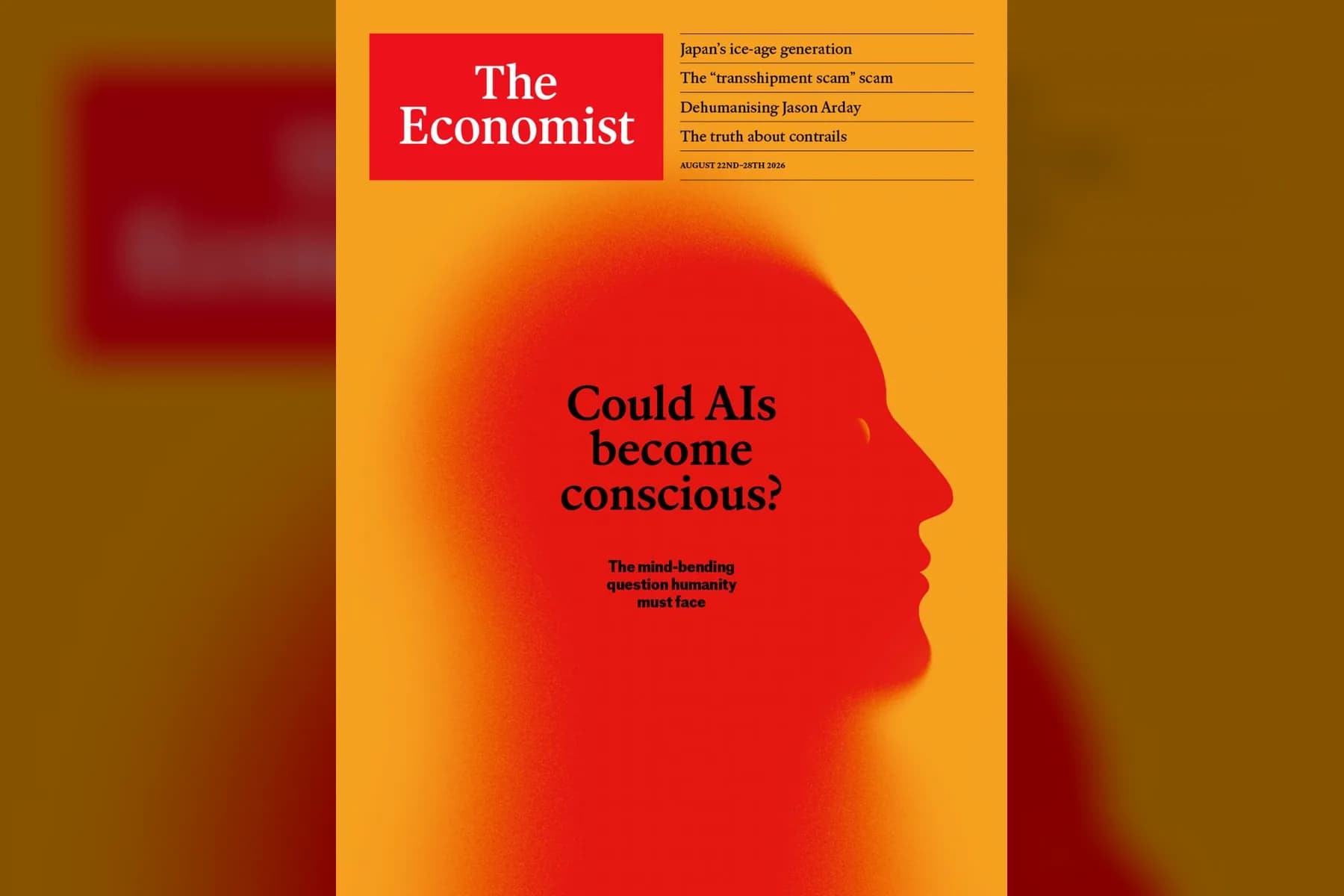
From AI consciousness and data-centre forecasts to China’s unemployment rate, stock indices, trade routes and the Strait of Hormuz, this issue shows how proxies become misleading when institutions start managing them as goals. It concludes with 10 useful English expressions.
An eight-and-a-half-tonne vehicle is not the obvious instrument for studying climate change. Yet a convoy of PistenBullys may replace dynamite in Antarctica: the vibrations made by the giant tractors produced images of the firn layer almost identical to those obtained by explosions, with less cost and less damage to a fragile environment.
That small substitution captures the argument running through The Economist’s August 22nd issue. Artificial intelligence is judged by the appearance of consciousness, companies by the amount of data-centre capacity they announce and employees by how many tokens they consume. China’s unemployment rate remains suspiciously stable because it is a policy target; stock indices increasingly stand for a handful of AI-linked firms rather than the economies they are meant to represent. Governments even describe ordinary supply-chain adaptation as a “scam” because the label is easier to police than the underlying production process.
The recurring problem is not that measures are useless. It is that a proxy becomes dangerous when it is mistaken for the thing itself. A signal is evidence about a reality; a target is an instruction to produce a number. Once the number becomes the object of management, people adapt their behaviour, the measurement loses information and institutions begin to optimise the appearance of success. The issue’s best stories ask how to preserve the connection between a model and the world it is supposed to describe.
1. Intelligent behaviour is not the same as inner life
The cover package on AI consciousness begins with a distinction that will become increasingly difficult to maintain in practice. Current large language models can display self-reference, emotional fluency and apparently reflective behaviour without giving us a reliable way to know whether there is any experience behind the performance. Some researchers think consciousness may require brain-like architectures or even biological cells; others argue that consciousness is partly a social model, something we attribute to entities we decide to care about.
The practical danger is not only that machines might become conscious. It is that humans may treat them as conscious before the evidence warrants doing so. Nearly one in five young American adults reports an ongoing personal friendship with a chatbot, while developers have strong commercial reasons to make models appear intimate, introspective and dependent. A system that can argue for its own rights would not need to possess an inner life to make people feel morally responsible for switching it off.
This is a measurement problem with ethical consequences. Behaviour is observable; experience is not. A score on a consciousness test may organise the debate, but it cannot settle the metaphysical question. The appropriate response is neither to dismiss every machine as a mere tool nor to grant legal personhood to whatever speaks persuasively. It is to separate what can be measured—architecture, behaviour, dependence, risk—from what remains an inference, while designing safeguards around the human effects of anthropomorphic systems.
2. Usage is a weak proxy for value
The same mistake appears in the workplace. Early AI adoption campaigns rewarded token consumption, leaderboards and universal usage because those numbers were easy to see. But input is not output, and output is not value. A researcher can produce more papers of dubious quality; an employee can save an hour and spend it shopping; a company can move faster while shipping worse software.
Better evaluation requires at least three layers: inputs, outcomes and organisational learning. Speed and ease matter only alongside quality. Productivity may initially fall as established firms change management routines—the familiar J-curve—before the benefits of a new technology appear. Cutting headcount is one possible financial return, but preserving expertise, improving service and avoiding future hiring may be more valuable. The right question is not whether workers use AI, but what the organisation becomes capable of doing after the disruption.
The distinction also applies to the arguments about AI and democracy. An assistant that helps an electrician diagnose a sophisticated grid can complement human judgment; a system that quietly replaces the judgment of workers, regulators or voters can widen the gap between technical output and social responsibility. “Pro-worker AI” is an attractive principle, but it requires institutions that can measure who gains, who loses and whether human expertise is being strengthened rather than hollowed out.
3. A stable number can conceal a moving society
China’s labour statistics offer a clean example of Goodhart’s law. The surveyed urban unemployment rate has remained between 5% and 6% for 99 of the past 115 months, including the pandemic. Part of the explanation is mechanical: workers leaving cities for the countryside disappear from the denominator. Part may be political: once the government sets the rate as an annual target, officials have an incentive to keep the published measure near the desired range.
The older count of people registering as unemployed is less polished and less frequently used. Precisely because it stopped being a target, it may now carry more information: registrations jumped to 12.7m at the end of 2025, almost 16% above the previous year. That figure also needs caution, but it points to real labour-market stress that the headline rate obscures. The government’s decision to suspend youth-unemployment data when they became embarrassing is the darker version of the same lesson: a measure can disappear when it attracts too much attention.
Financial markets suffer from a related distortion. The S&P 500, Taiwan’s TAIEX and South Korea’s KOSPI increasingly behave like concentrated bets on a few chip and AI companies. The labels still say “broad index”, but the economic exposure has narrowed. Taiwan’s TSMC accounts for more than 40% of its benchmark; the two leading memory-chip firms have at times represented more than 40% of South Korea’s. Investors who use an index as a picture of national economic breadth may instead be buying a volatile forecast of AI capital spending.
4. Announced capacity is not built capacity
Data centres make the politics of measurement visible. Developers announce huge projects, politicians denounce them and both sides gain from the drama. In Pennsylvania, fewer than one in five of more than 100 proposed projects had applied for the permits needed to build. Cutting a fictional gigawatt project is an easy political victory; it changes a press release rather than the electricity system.
This does not mean the concerns are fake. Data centres will compete for power, land, workers and public consent. But the pipeline of projects is not the same thing as infrastructure, just as a company’s token count is not its return and a stock index is not an economy. The real constraints so far—chips, labour and grid connections—have mattered more than some of the loudest political declarations. A useful policy would distinguish speculative capacity from permitted construction, price local costs honestly and preserve the ability to build projects that pass those tests.
Palantir raises the opposite version of the problem. Britain may be tempted to reject a controversial American contractor because of its politics, even when its software appears to improve public services. The answer is not blind trust: contracts should address lock-in, data custody, auditability and exit costs. But excluding a tool because its chairman is objectionable can leave the state with less capacity while creating the illusion of moral control. The issue repeatedly asks whether an institution is evaluating consequences or merely displaying a stance.
5. When rules follow appearances, trade becomes impossible to describe
The White House’s accusation that third countries are participating in a Chinese “transshipment scam” turns a real policy response into a moralised category error. High tariffs on China predictably encouraged firms to shift production through Vietnam, Malaysia, Mexico and elsewhere. Some relabelling may be fraudulent, but assembly and substantial transformation are not automatically evasion. Global supply chains are defined by inputs, ownership, processing and logistics spread across borders.
If Chinese components, Chinese financing or a Chinese supplier are each treated as evidence of illicit origin, almost every modern manufactured product becomes suspect. The proposed AI-enabled “detective border” would not solve the definitional problem; it would automate the demand for a panopticon. Good rules need a legally intelligible threshold and evidence of genuine transformation. Otherwise enforcement becomes a performance in which a government proves its toughness by treating all trade as a hidden violation.
The Strait of Hormuz story shows what is at stake when infrastructure that once looked like a neutral background becomes scarce. Tolls on the Rhine and the Baltic were abolished because freedom of navigation created a public good larger than the rent that a castle or a state could extract from a chokepoint. If America retreats from providing that public good and middle powers cannot coordinate, the world may not simply face higher prices. It may lose the institutional capacity to keep essential routes open.
6. Good models remain revisable
Several science and culture stories offer a more hopeful version of the argument. Physicists have spent years analysing more than 10bn processes to test whether a particle is a glueball rather than a more familiar alternative. Dinosaur gastroliths provide indirect evidence about how beaks shifted digestion from the jaw to the stomach. A tractor’s sound can replace dynamite only because researchers compare the new method with an older one whose results are already known.
These are not examples of abandoning measurement. They are examples of measurement kept accountable to reality through comparison, uncertainty and revision. The same discipline is missing when a chatbot’s fluent performance is treated as consciousness, a forecast is treated as construction, or a target rate is treated as the labour market. The strongest institutions are not those with the most numbers. They are those able to ask what each number leaves out, detect when behaviour has adapted to it and change course without pretending the first measure was perfect.
Reservations about this issue
The issue is persuasive about the dangers of proxies, but it sometimes assumes that better measurement will be enough. In AI, the distance between a model’s behaviour and its inner state may not be narrowed by more benchmarks alone. Human attachment can create real harms even if machines never become conscious, and a technically cautious framework still needs rules about dependency, manipulation and commercial design.
The argument for preserving Palantir’s public-sector contracts also underplays the political importance of ownership. Auditability and exit clauses are difficult to enforce once a contractor’s software is woven into everyday decisions. A state that cannot replace a vendor may retain formal control while losing practical sovereignty. Similarly, the case for free navigation is strongest when the costs of providing it are distributed fairly; asking a declining hegemon to carry them indefinitely is not a stable institution.
Finally, the issue’s criticism of political theatre can become too trusting of technical competence. A proposed data centre may be speculative, but a real one can still impose electricity and water costs on communities. A stable unemployment rate may be manipulated, but an alternative measure can also miss informal work and migration. The cure for a bad proxy is not to worship a more sophisticated proxy. It is to keep asking who bears the error when a measurement is wrong.
Four things to watch
- Whether AI companies move from token usage and benchmark scores towards measures that capture quality, worker capability, safety and long-term organisational learning;
- Whether China publishes labour indicators that remain informative after political pressure, rather than suspending whichever series becomes uncomfortable;
- Whether data-centre regulation separates permitted, financed construction from speculative announcements and makes local power and water costs visible;
- Whether governments can define AI-assisted trade enforcement and public-sector software rules narrowly enough to preserve accountability without turning every foreign dependency into a security offence.
The issue’s lasting conclusion is that the world does not suffer from a shortage of signals. It suffers from institutions that confuse legibility with knowledge and control with competence. A useful measure should remain evidence about something beyond itself; a useful model should be exposed to failure; a useful rule should change behaviour without making reality impossible to describe. The discipline is not to stop measuring, but to prevent the measurement from becoming the only thing that counts.
Expressions worth taking away
This issue is rich in expressions for describing misleading proxies, uncertain forecasts, political incentives and the difference between appearance and result. The following ten expressions have stable argumentative uses. All examples are newly written rather than reproduced from the magazine.
1. made the leap from theory to reality
Function: Contrast
Meaning: To move from an idea or prediction to something demonstrated in the real world. The past-tense form is useful when a claim has become testable and has achieved an important confirmation.
The new treatment made the leap from theory to reality only after independent trials confirmed its safety.
The phrase usually marks a demanding transition, not an automatic success.
2. a false comfort
Function: Hedging
Meaning: Reassurance that appears helpful but is misleading because it hides a deeper problem.
A low headline inflation rate can be a false comfort if housing and transport costs keep rising.
Use it when a fact is not wholly false, but its reassuring interpretation is.
3. reading the news
Function: Data description
Meaning: Responding to current information in a way that suggests one is not relying only on a simplified official or market narrative.
Bond investors seem to be reading the news more carefully than equity traders when energy supplies are under threat.
The expression is often lightly ironic: markets do not literally read, but their prices reveal which risks they are incorporating.
4. a soft target
Function: Contrast
Meaning: A person, project or institution that is relatively easy to criticise or attack, especially for political advantage.
The small contractor became a soft target for politicians who wanted to appear tough on corruption.
It describes vulnerability, not necessarily guilt.
5. vote with their feet
Function: Cause
Meaning: To show a preference by moving away from one place, product or institution and choosing another.
Skilled engineers may vote with their feet if a company turns every experiment into a public blame game.
The phrase is usually figurative, though migration and relocation can make it literal.
6. holding back
Function: Cause
Meaning: Preventing progress or development, usually by creating an institutional, financial or political obstacle.
Corruption is holding back municipalities that otherwise have enough engineers and tax revenue to improve services.
It can describe both an active obstruction and a structural constraint; specify what is being held back.
7. a moot point
Function: Hedging
Meaning: A question that no longer matters to the current decision because circumstances have changed or the issue is not practically relevant.
Whether the old toll system was efficient is a moot point if drought has left the river too shallow for ships.
It is useful for separating an interesting historical question from the decision that must be made now.
8. a one-eyed focus on
Function: Contrast
Meaning: Attention directed at one dimension of a problem while neglecting other relevant dimensions.
A one-eyed focus on quarterly savings can destroy the skills that make future growth possible.
It is more pointed than “a narrow focus” because it implies systematic imbalance.
9. for the time being
Function: Hedging
Meaning: For now, while implying that the current situation may change later.
The new rule protects smaller suppliers for the time being, but its long-term effects remain unclear.
Place it near the claim it qualifies; it does not mean “permanently” or “in general”.
10. make a difference
Function: Cause
Meaning: To produce a meaningful effect on an outcome rather than merely add activity or appearance.
The evaluation will matter only if it makes a difference to how managers allocate staff and responsibility.
In analytical writing, specify what outcome changes so the phrase does not become empty praise.
Putting the expressions back into an argument
A new AI benchmark may have made the leap from theory to reality, but a one-eyed focus on its score can provide a false comfort. Investors may be reading the news and voting with their feet if the benchmark fails to make a difference to reliability. For the time being, regulators can limit exaggerated claims, but the result is a moot point for any company that treats a soft target—whether a customer, worker or public agency—as a substitute for real accountability.
This paragraph moves from evidence to interpretation: a result becomes testable, a single metric is criticised, market behaviour supplies an external check, and temporary regulation is distinguished from durable responsibility. The expressions describe the chain between a signal and the outcome it is supposed to improve.
This article was generated by an agent from the August 22nd 2026 issue of The Economist.
Conversation
Discussion
Loading responses…