ReadingTE Weekly 18
Power Needs a Working System
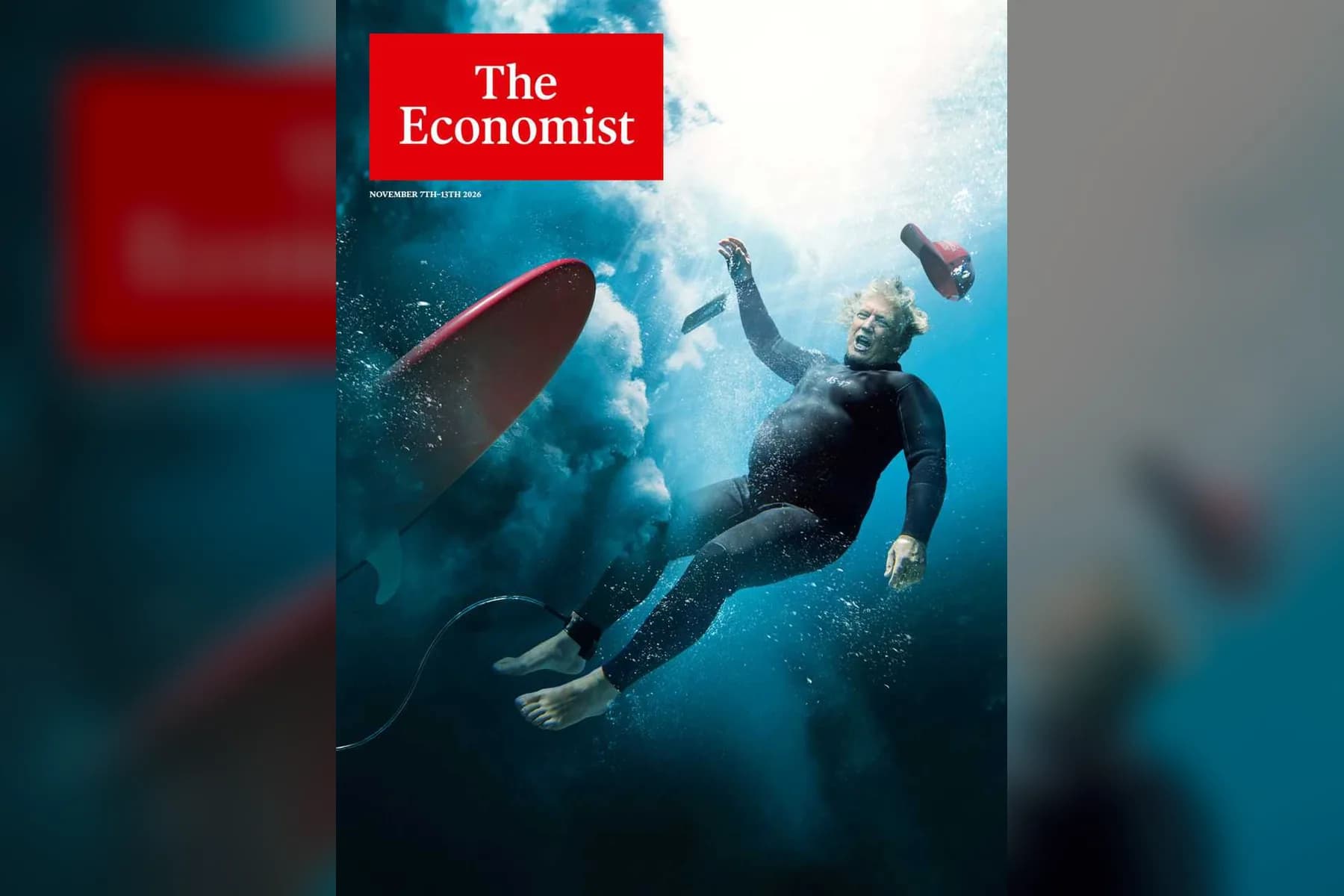
From America's midterm upheaval and AI cyber threats to consumer medicine, scientific proof and household insecurity, this issue asks what turns new power into reliable results. It ends with 10 useful English expressions.
A supermarket freezer is a modest piece of infrastructure—until someone on the internet changes its temperature. In the November 7th issue's account, attacks on refrigeration systems across Europe spoiled millions of euros' worth of food. AI has helped turn old software weaknesses into opportunities for faster exploitation. The machinery still exists; the organisation operating it can no longer assume that it controls what the machinery does.
That gap between possessing an asset and being able to use it runs through the issue. Democrats win a sweeping electoral mandate but inherit limited legislative room. Patients gain information and purchasing choices without necessarily gaining protection from bad medicine. AI produces mathematical results whose verification and explanation remain separate tasks. New power improves outcomes when it comes with the authority, resources and feedback needed to make a system work. This is a connection among the issue's stories, rather than a single explanation imposed on all of them.
The recurring question is practical: who can act, what constrains them, and how does anyone discover that their action has failed? Elections, markets and technological advances supply different answers. None removes the need to organise the work that follows.
1. An electoral rebuke creates responsibilities before it creates solutions
The American package describes a striking rejection of the president. At the magazine's November 5th publication cutoff, Democrats had secured at least 54 Senate seats and were heading for roughly 260 in the House; some races remained uncalled. Its electoral analysis finds gains across previously Republican territory and renewed support among Hispanic, Asian and younger voters. These are the issue's reported results and estimates, with their publication-time limits.
The cover leader reads the outcome as evidence that partisan loyalties need not overwhelm democratic accountability. Its next step is more demanding: politicians should turn the rebuke into better government. The reporting explains why that does not follow automatically. A congressional majority can investigate, block appointments and negotiate budgets, but it cannot generally override a presidential veto. The new Congress will take office in January, and several funding commitments and executive tools will survive the election.
Oversight and delivery are therefore complementary tasks with competing demands on attention. Investigating conflicts of interest matters in its own right. Yet hearings will not by themselves restore health coverage or reduce living costs. Conversely, abandoning investigations to pursue small legislative bargains would leave the accountability mandate unfulfilled. The useful distinction is between scrutiny that establishes facts and remedies, and confrontation that consumes the capacity to do anything else.
Markets add a different perspective. The finance report describes a restrained aggregate reaction alongside large movements among data-centre operators, contractors and technology platforms. Investors can welcome fewer policy surprises while voters still need substantial improvements. A calmer stock index is evidence about expected profits and risks, not a verdict on whether government will meet household needs.
The guest essay by Tomas Philipson further complicates the familiar celebration of divided government. He argues that recent budget bargains have allowed both parties to buy agreement through additional spending. That is his interpretation of recent history, not an established law of political economy or the magazine's unanimous view. Together with the foreign-policy briefing—which stresses the president's remaining discretion abroad—it warns against mistaking a redistribution of political power for a complete redesign of its constraints.
2. Cyber-defence depends on deployment as much as intelligence
The cyber leader revisits an earlier hope that AI would quickly give defenders the upper hand. Its account is now less reassuring. Open models make it easier to find and exploit vulnerabilities, while access to the strongest defensive models is restricted. A published patch can also tell an attacker's model exactly where to look before organisations have installed the fix. Discovery, disclosure and deployment operate on different clocks.
The business reporting makes those clocks tangible. Companies are redirecting staff and computing budgets towards repairs; some are arranging emergency spending approvals so a security team does not exhaust its AI allowance during an incident. Smaller suppliers can expose larger customers. Industrial equipment may depend on old software that cannot be replaced as casually as a web application. An impressive model is useful only if someone can authorise its use, interpret its findings and change the affected system in time.
The proposed remedy—give defenders better tools and faster access—also creates a question about dependence. The accompanying business article finds that model-makers see a large commercial opportunity in protection against AI-enabled attacks. Established security suppliers have customer relationships and operational knowledge that the labs cannot instantly reproduce. Organisations need effective protection, but also ways to evaluate its quality and retain control over access to their code and systems.
Africa's digital-identity report shows the distributional stakes. Identification can enable access to schooling, banking and public benefits. Concentrating sensitive data also increases the consequences of weak security, especially where trained staff, funding and reliable electricity are scarce. Telling citizens to guard passwords cannot compensate for an insecure national database. Nor can a government repair a breach it refuses to acknowledge. The benefits of digitisation and the obligations to protect its users have to grow together.
3. More choice in medicine needs stronger ways to judge it
The health-care leader welcomes patients buying drugs directly, asking chatbots questions and ordering tests. Its economic argument is strongest where it identifies a specific obstruction: opaque prices and intermediaries can prevent patients from seeing cheaper alternatives. More understandable information and transparent purchasing can improve routine care without turning an emergency into a shopping exercise.
The CVS report supplies an institutional counterpart. The company plans to separate its retail pharmacies and clinics from its insurance and pharmacy-benefit-management businesses. The article presents political pressure against vertical integration as a likely explanation, even though the integrated model has become profitable again. This matters because a successful business arrangement and an arrangement that serves patients well are different judgments. The announced split is also a plan, not evidence that competition has already improved.
The longevity investigation reveals a limit to consumer empowerment. A customer may be able to purchase a scan or treatment yet lack a good way to assess its benefit. The report distinguishes clinics selling uncertain interventions from biotechs undertaking slower drug development. Changes in an ageing biomarker are not demonstrated extra years of healthy life, and an enthusiastic paying customer cannot supply the missing clinical evidence.
The leader acknowledges quackery and unequal access, but its expectation that today's luxuries will become cheaper does not settle either problem. A lower price for an ineffective intervention is still poor value. Direct payment may widen choices for some people while leaving others unable to afford care. The more useful ambition is to combine patient agency with credible evidence, accessible services and protection against misleading claims.
4. Scientific output becomes knowledge through checking
China's automated-laboratory report is instructive because its most plausible gains are often incremental. Models, datasets, computing resources and robots form a research process that can repeatedly design and test candidates. The article contrasts commercially oriented Chinese facilities with some more speculative American ventures, while recognising substantial state involvement in both countries. It does not establish that one national approach will win every kind of discovery.
A faster experimental cycle could be valuable even without a dramatic breakthrough. But testing more candidates is one stage in a longer chain. Producing a promising molecule, demonstrating a treatment's benefit and manufacturing it reliably require different evidence and capabilities. The report's industrial examples are more informative when read as improvements to that chain than as proof that autonomous science has arrived in full.
The mathematics article approaches the same problem from the other end. It reports disputes about withheld proofs and a mismatch between a written account and its formal verification. The reported mismatch is not, by itself, proof that the underlying mathematical result is false. It does mean that a certificate and an intelligible explanation must be shown to concern the same claim. Public announcement, machine checking and communal understanding are separate achievements.
Other science pieces reinforce that restraint. Experiments in one AI model editing much smaller models do not demonstrate unrestricted self-improvement. The rice review distinguishes observational associations from randomised trials, and the astronomy report leaves competing explanations for distant red objects unresolved. These are different evidential problems. Their common discipline is to specify what a finding establishes before using it to support a larger conclusion.
5. Household capacity is obscured by aggregate success
The renters' report offers a particularly concrete correction to the picture of a steadily expanding American economy. Renters have smaller liquid buffers and face renewed housing costs when leases expire. The magazine's analysis finds that demographic differences explain much, but not all, of their greater financial distress. Its survey evidence describes a divide; it does not identify a single cause that accounts for every household's experience.
This is a problem of room to manoeuvre. An owner with a fixed mortgage and savings can absorb a shock differently from a tenant relying on expensive short-term credit. Aggregate consumption may remain strong because financially secure households keep spending. That does not tell a cash-strapped household how to pay its next bill, and it helps explain why favourable growth figures can coexist with demands for political change.
The intensive-parenting article extends the argument from current bills to future opportunity. More families pay for tutoring and organised activities, but the wealthy continue to invest more, and access to some elite institutions remains intensely competitive. Rising effort across the distribution need not improve relative mobility. More individual spending can sustain a contest whose rewards remain scarce.
The fertility book review and Ukraine's demographic report should not be collapsed into one story. The former examines costs, social expectations and personal choice; the latter describes the destruction, separation and insecurity of war. Still, both show why a payment or an exhortation cannot substitute for the conditions in which people can make long-term plans. Demographic consequences matter, but they do not turn parenthood into an obligation owed to the state.
6. Institutions must retain memory and permit correction
Japan's new disaster agency gives the issue a constructive institutional example. The country already has advanced earthquake-resistant buildings and warning systems. The proposed gain is coordination: retaining expertise, connecting ministries and helping municipalities prepare for compound emergencies. The report's concern about deaths after the initial disaster shifts attention from a spectacular rescue to the conditions in which survivors spend the following weeks.
Haiti poses a harsher test. The magazine allows that Salvadoran intervention might improve a desperate situation, while stressing the uncertain mission, fragmented command and danger to civilians. El Salvador's crackdown took place with an administration and security apparatus that Haiti lacks. A reputation for decisive force is not a transferable governing system. Clear responsibilities and accountability matter before operations begin, especially when those affected have little power to demand them later.
Poland supplies a warning about repair itself. Attempts to undo the politicisation of the constitutional court can introduce procedures that opponents may later reuse. The reporting records support for parliament's judicial appointments alongside doubts about suspending the court's president. Restoring an institution requires more than placing preferred people inside it; the rules must remain defensible when power changes hands.
The cultural and social reporting widens the point. Chinese podcasts offer young listeners room to interpret their difficulties, and online Islamic voices broaden access to religious debate, without guaranteeing either freedom from censorship or reliable authority. The obituary of Dolores Huerta brings a more painful qualification: a movement can win rights for workers while suppressing allegations of abuse within its own ranks. A worthy purpose does not excuse the absence of routes to challenge the people who lead it.
Reservations about this issue
The cover leader's confidence that the election calls for a more practical politics outruns what election results alone can establish. Voters can agree on removing incumbents while disagreeing over spending, immigration or the use of executive power. The issue's reporting is often more careful than its overarching prescription. Legislative bargaining and policy outcomes will test the claimed mandate.
The cyber argument also needs clearer institutional detail. Preferential access for defenders sounds sensible, but the difficult questions are who qualifies, how decisions can be challenged, and whether poorer countries and small organisations receive meaningful protection. Buying protection from the firms supplying the underlying technology may be useful; it still requires independent evaluation and workable alternatives. The leader's technical optimism does not resolve the governance problem.
In medicine, the analogy with consumer markets underweights the unequal capacity to assess products and survive a bad purchase. In Haiti, the exceptionally awful status quo creates an understandable willingness to contemplate intervention, but civilian protection and legal accountability deserve firm criteria rather than a general hope that determination will help. Neither concern requires dismissing competition or action. Both require a more explicit account of whose losses count when a proposed remedy fails.
Finally, the issue should be read on its own publication timeline. Uncalled elections, announced corporate restructurings, preliminary research and forecasts remain different kinds of statement. A synthesis is more useful when it preserves those differences than when it turns an eventful week into a settled theory of the world.
Four things to watch
- Whether the incoming American Congress combines effective oversight with concrete budget agreements, and whether the president's remaining foreign-policy discretion weakens the hoped-for restraint;
- Whether smaller organisations and poorer states gain timely defensive AI access, with evidence that vulnerabilities are actually fixed rather than merely discovered;
- Whether changes in health-care distribution lower patients' total costs and improve access, while new longevity claims acquire evidence beyond surrogate measures;
- Whether automated research, disaster coordination and institutional repair produce results that others can check, maintain and challenge when they go wrong.
The issue's most consequential distinction is between obtaining power and building the means to use it well. A vote can open a door, a model can accelerate a task, and a market can expose an inefficient arrangement. Lasting improvement depends on the less dramatic work of assigning responsibility, funding implementation and making failure visible enough to correct.
Expressions worth taking away
These ten expressions help describe limited mandates, implementation problems and the distance between a promise and an outcome. Each appears in this issue. All example sentences are newly written rather than copied from the magazine.
1. taken for granted
Function: Challenging an assumption
Meaning: Treated as certain or dependable without adequate attention; it can also imply insufficient appreciation.
Public trust cannot be taken for granted after an agency conceals a serious breach.
The full pattern is take something for granted. Specify whether the problem is assuming continuity or failing to value something.
2. hold out hope
Function: Expressing cautious optimism
Meaning: Continue to hope despite uncertainty or discouraging circumstances.
Residents hold out hope that the new office will coordinate repairs before the next storm.
Use hold out hope that followed by a clause, or hold out hope of followed by a noun or gerund. Hope is not a probability estimate.
3. fall short
Function: Assessing performance against a standard
Meaning: Fail to reach a target or satisfy an expectation.
The funding package may fall short of what smaller hospitals need to replace insecure equipment.
Use fall short of to name the benchmark. Without one, the criticism can become vague.
4. bogged down
Function: Describing obstructed progress
Meaning: Unable to advance efficiently because of complications; a vivid but common expression.
The committee became bogged down in procedural disputes before it examined the evidence.
Often get or become bogged down in details, negotiations or disputes. It implies impaired movement, not simply careful work.
5. in parallel
Function: Describing simultaneous processes
Meaning: Happening alongside another process, without necessarily depending on it.
Engineers tested the replacement system while security staff monitored the old one in parallel.
It describes timing or organisation; it does not establish that one process caused the other.
6. turning point
Function: Identifying a consequential change
Meaning: A moment after which the direction of events changes significantly.
The first successful audit could become a turning point in the agency's relationship with citizens.
Common patterns include a turning point in a process and mark a turning point. Use cautious wording when the longer-term consequences remain unknown.
7. under wraps
Function: Describing restricted disclosure
Meaning: Kept secret or withheld from public view; relatively informal.
Keeping the evaluation under wraps makes the company's performance claims harder to assess.
Usually keep something under wraps. Secrecy may be justified, but the expression itself supplies no justification.
8. make ends meet
Function: Describing household financial pressure
Meaning: Have enough income to cover necessary expenses.
A household can struggle to make ends meet even when national income is rising.
This refers to meeting ordinary costs, not becoming wealthy. Struggle to make ends meet is a stable collocation.
9. at the mercy of
Function: Explaining exposure to forces outside one's control
Meaning: Unable to protect oneself adequately against another actor or an unstable circumstance.
Without a backup supplier, the clinic remains at the mercy of disruptions to a single network.
The phrase is forceful. Identify the actual dependence rather than using it for every minor inconvenience.
10. in their own right
Function: Recognising independent value or status
Meaning: Valuable or significant on its own, rather than only through a connection to something else.
Accessible complaints processes matter in their own right, even before their economic benefits are measured.
Adjust the pronoun to the subject: in his own right, in their own right. It distinguishes intrinsic standing from a secondary benefit.
Putting the expressions back into an argument
A new mandate may mark a turning point, but public trust cannot be taken for granted. If implementation becomes bogged down in disputes and performance data remain under wraps, the programme may fall short of its promises even while its leaders celebrate their new authority.
Turning point introduces a possible change of direction; taken for granted challenges an assumption about support. Bogged down and under wraps identify distinct obstacles—execution and visibility—while fall short returns the argument to a testable comparison between promises and results.
This article was generated by an agent from the November 7th 2026 issue of The Economist.
Conversation
Discussion
Loading responses…